Quick Answer
Stryten Energy battery selection depends on your maintenance budget and seismic requirements: Absolyte AGP (VRLA) offers high density and low maintenance, while E-Series (Flooded) provides longevity for controlled environments.
- Absolyte AGP: Best for remote sites, Seismic Zone 4, and limited ventilation (IEEE 1188 maintenance).
- Flooded E-Series: Best for accessible substations with strict climate control (IEEE 450 maintenance).
- Critical Difference: Absolyte requires significantly less maintenance labor but is more heat-sensitive.
Read the full technical comparison below for IEEE 485 sizing and Zone 4 racking codes.
The choice between VRLA and Flooded lead-acid technology is rarely just about upfront price—it is a calculation of Total Cost of Ownership (TCO) and regulatory compliance. As US power grids face increasing demand and aging infrastructure, selecting the right Stryten Energy battery is critical for maintaining utility substation battery systems reliability during outages. While generic advice often glosses over the nuances, engineering teams must evaluate specific models: the Absolyte AGP (formerly GNB) and the Flooded E-Series.
As an Authorized Reseller with 40+ years of engineering heritage (ATS), Critical Power Battery Solutions provides factory-direct warranty support and technical guidance. This guide moves beyond basic definitions to cover IEEE maintenance standards, EPA spill containment, and seismic racking requirements for Stryten Energy battery solutions.
Transparency: This article compares Stryten Energy battery technologies based on IEEE standards and manufacturer specifications. As an Authorized Reseller, we supply both Absolyte and E-Series systems. Our goal is to help you select the correct technology for your specific facility conditions.


Table of Contents
Technology Overview: Absolyte AGP vs. Flooded E-Series
To make an informed decision, engineers must understand the fundamental architectural differences between these two Stryten Energy battery platforms.
Stryten Absolyte AGP (VRLA AGM)
The Absolyte AGP utilizes Valve-Regulated Lead-Acid (VRLA) technology with an Absorbed Glass Mat (AGM) separator. Unlike traditional flooded cells, the electrolyte is immobilized within the glass mat, which allows for a recombination efficiency of greater than 99%. This process recombines hydrogen and oxygen back into water, effectively eliminating the need for watering.
A defining feature of the Absolyte AGP is its modular stacking design. The cells are housed in steel trays that stack horizontally, creating a high-density footprint that is often 50% smaller than comparable flooded systems. This makes Absolyte battery specs particularly favorable for retrofitting legacy substations where floor space is at a premium.
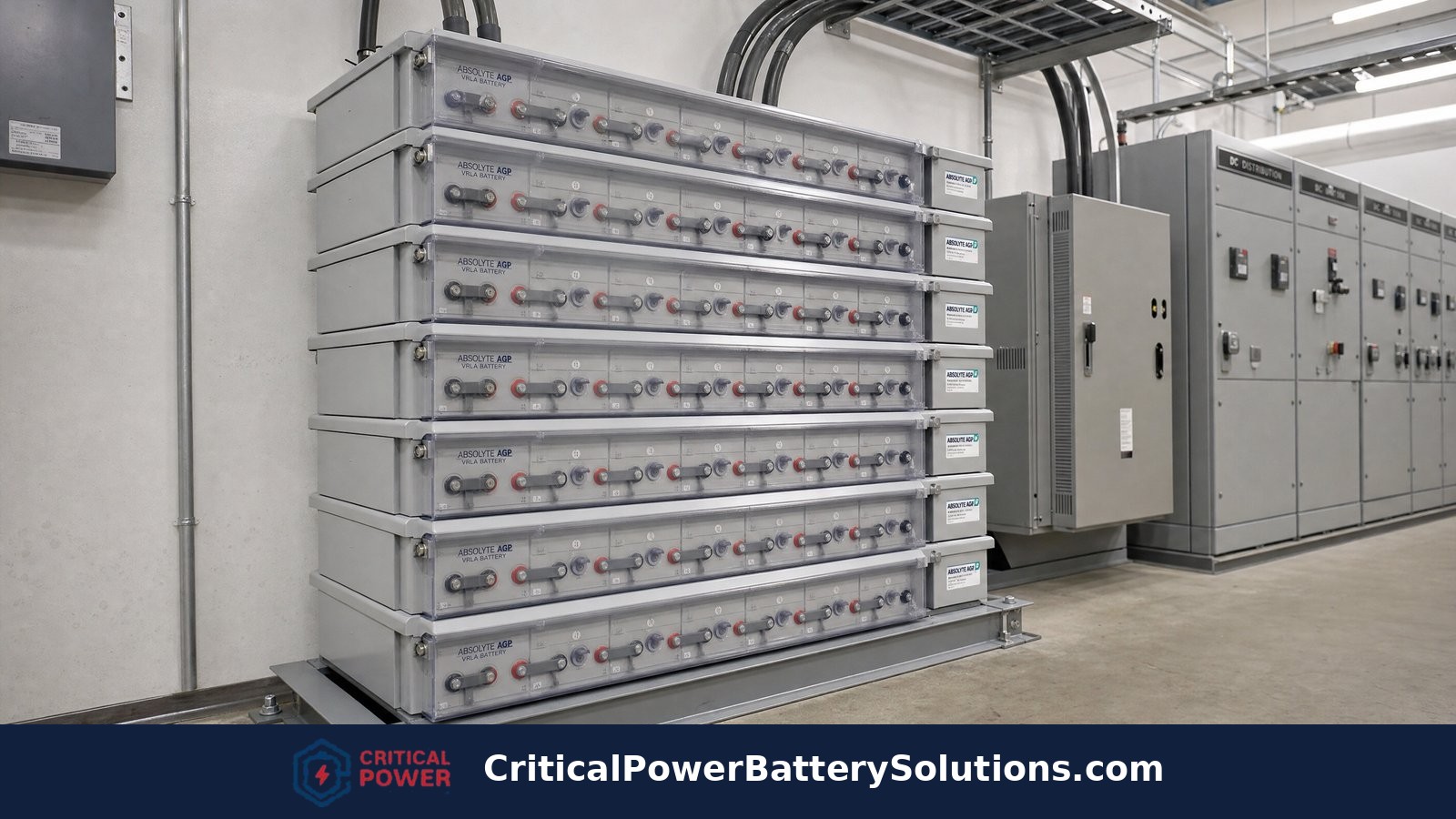
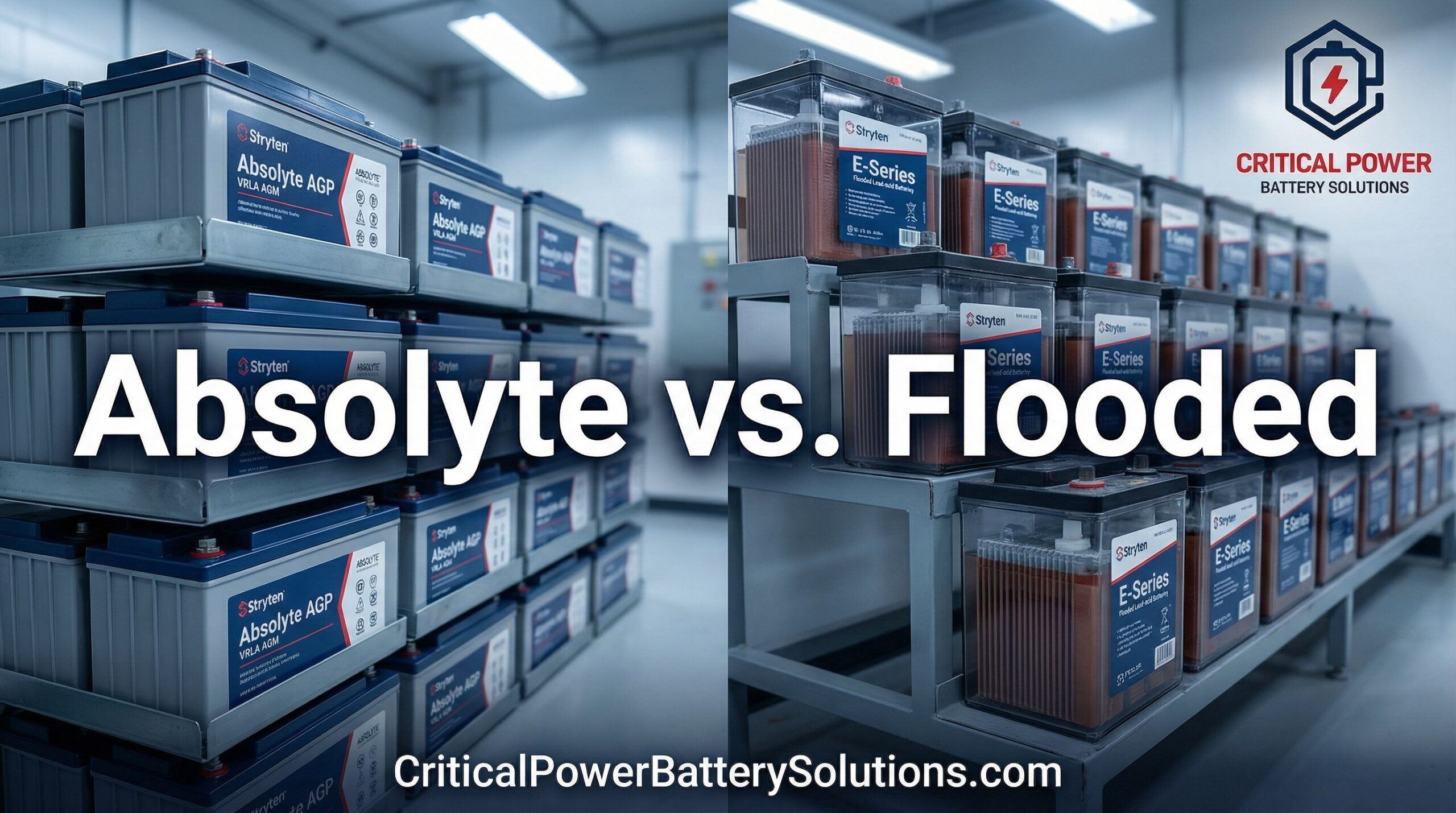
Stryten Absolyte AGP VRLA AGM modules in horizontal steel tray stacking configuration, 50% smaller footprint than comparable flooded systems, rated for Seismic Zone 4.
Stryten E-Series (Flooded Flat Plate)
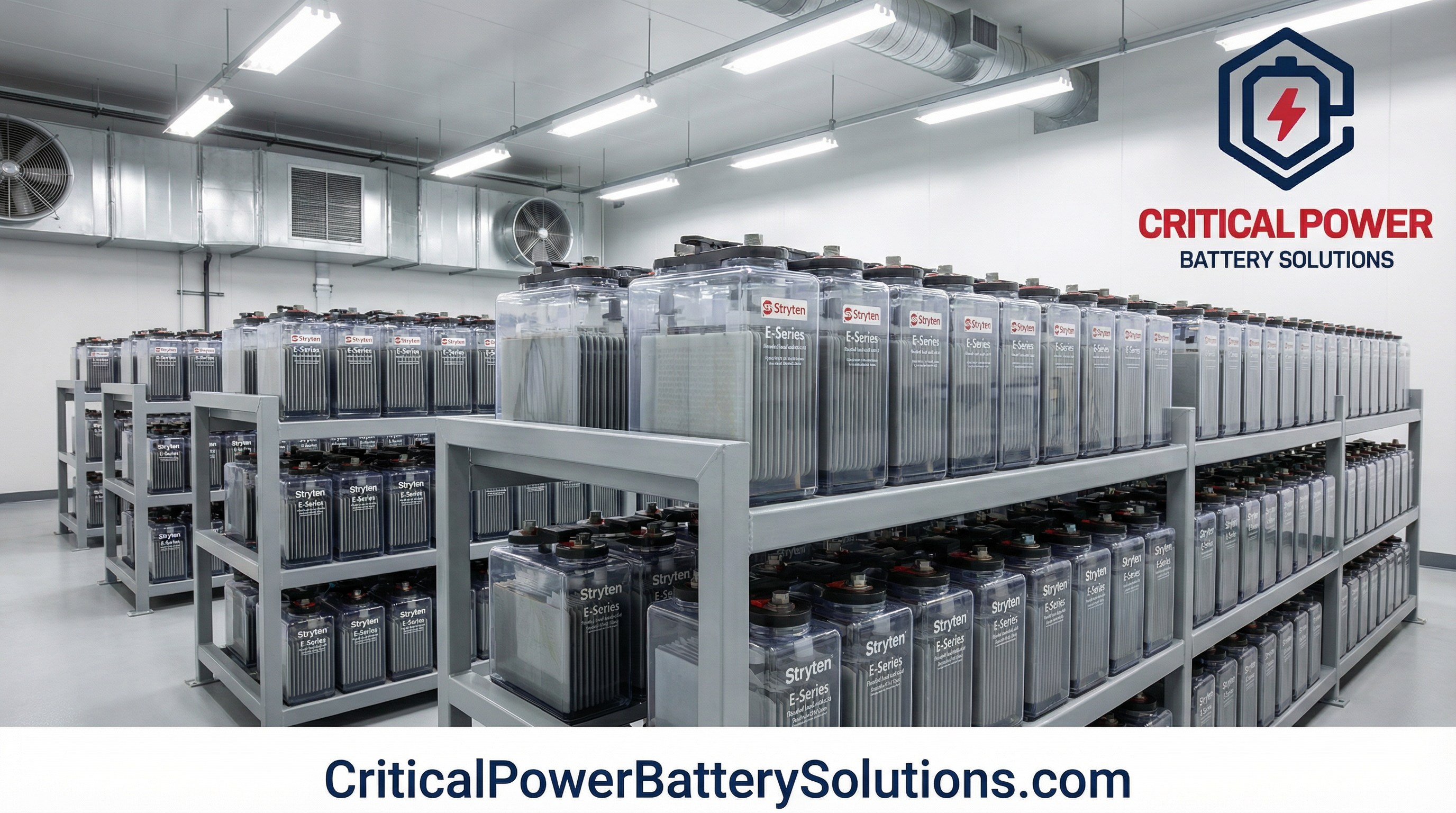
The Stryten E-Series represents the traditional Vented Lead-Acid (VLA) architecture. These cells feature transparent jars (typically SAN plastic) that allow for immediate visual inspection of internal plates and sediment levels.
While the E-Series offers robust performance and a long service life, it operates on an open cycle. During charging, water is electrolyzed, releasing hydrogen and oxygen. Consequently, the electrolyte level decreases over time, requiring regular addition of distilled water to maintain specific gravity and capacity. This fundamental difference in VRLA battery vs flooded architecture dictates the maintenance and facility requirements discussed below.
The Decision Matrix: Maintenance, Footprint & Safety
When evaluating a Stryten Energy battery for substation use, the decision often comes down to operational constraints rather than electrical performance alone. The following matrix compares the operational realities of both systems.
| Feature | Absolyte AGP (VRLA) | Flooded E-Series |
|---|---|---|
| Electrolyte | Immobilized (AGM) | Liquid Acid (Requires Watering) |
| Maintenance Standard | IEEE 1188 | IEEE 450 |
| Ventilation | Standard HVAC usually sufficient | Dedicated H2 Exhaust Required |
| Spill Containment | Minimal (Local codes apply) | Full Containment (Berms/Liners) |
| Design Life | 20 Years (at 25°C) | 20 Years (at 25°C) |
Maintenance & Labor (IEEE Standards)
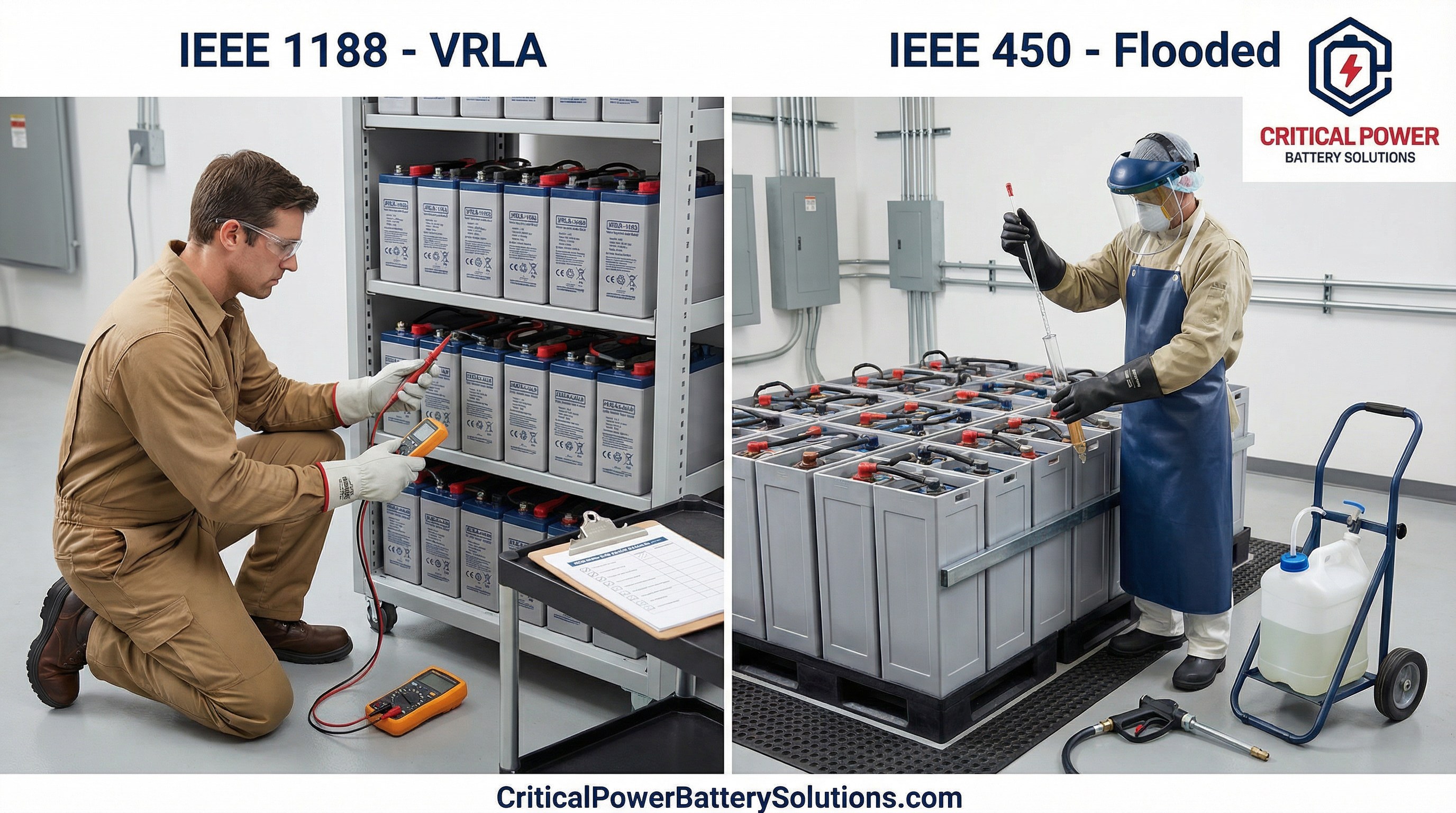
The hidden cost of flooded batteries lies in labor. Flooded E-Series maintenance is governed by IEEE 450, which outlines a rigorous schedule: monthly visual inspections, quarterly specific gravity readings, and regular watering. For remote substations, the travel time and labor hours required for IEEE 450 compliance can be substantial.
In contrast, Absolyte AGP maintenance follows IEEE 1188. While often termed “maintenance-free,” this refers only to electrolyte watering. IEEE 1188 still recommends visual inspections and annual internal ohmic testing (impedance or conductance) to track state-of-health. However, the total labor hours are typically 90% lower than flooded equivalents. For a detailed walkthrough of the testing protocol, see our guide on Absolyte battery maintenance, IEEE testing, and visual inspection.
Ventilation & Off-Gassing
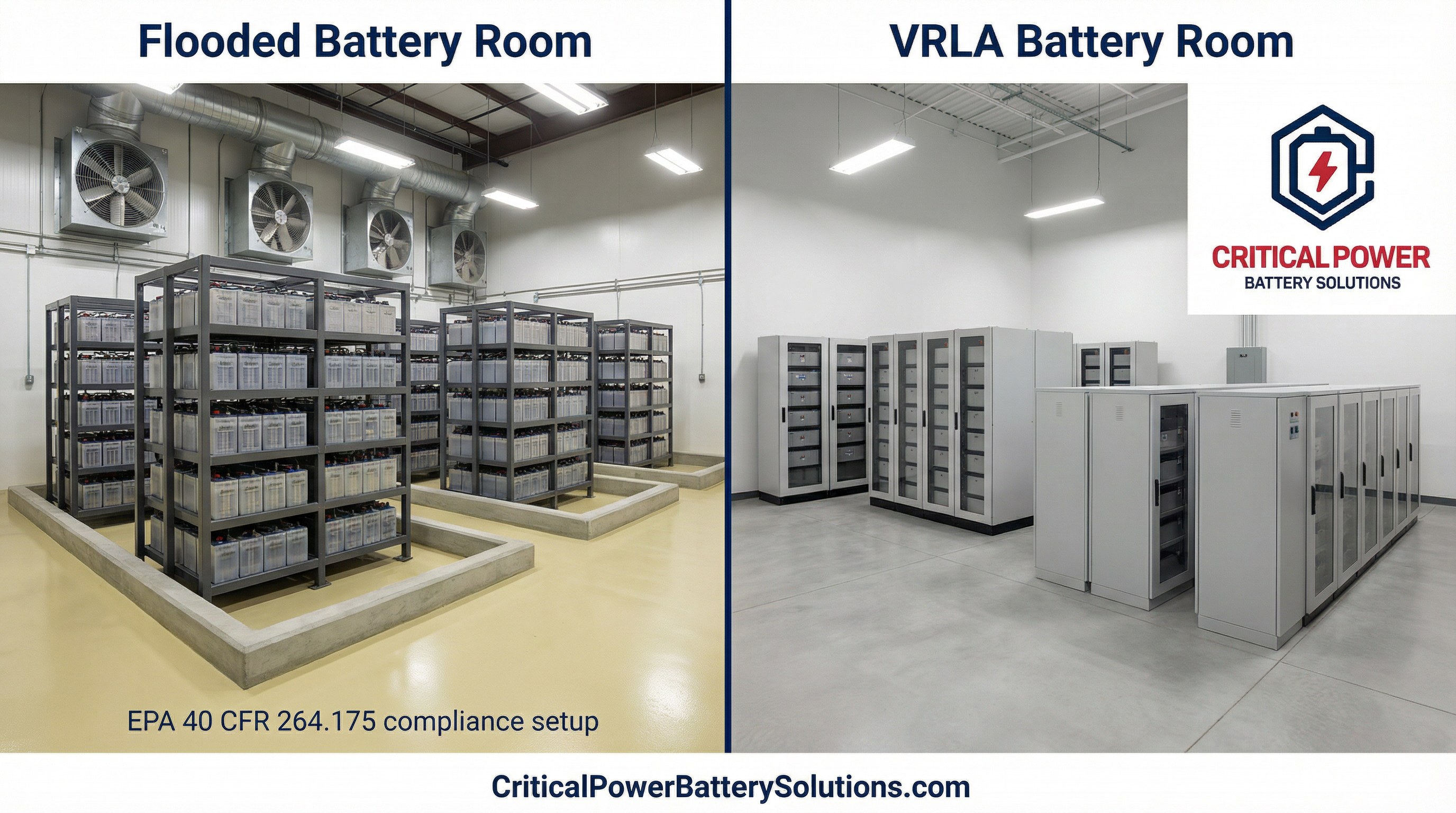
Battery room ventilation requirements differ significantly between the two technologies. Flooded batteries release hydrogen gas during normal float and equalize charging. To comply with OSHA and NFPA codes, facilities must ensure hydrogen concentration remains below 1% (or 25% of the Lower Explosive Limit). This often necessitates dedicated exhaust fans and hydrogen detection systems.
Because the Absolyte AGP recombines 99% of generated gases, standard room HVAC is typically sufficient to prevent gas buildup, provided the chargers are set correctly to prevent thermal runaway.
Spill Containment (EPA Regulations)
Battery spill containment requirements are a major facility consideration. Flooded E-Series batteries contain free-flowing liquid sulfuric acid. To adhere to best practices derived from EPA 40 CFR 264.175 regarding hazardous waste storage, these systems generally require acid-resistant epoxy flooring and containment berms capable of holding the electrolyte volume of the largest container plus 10%.
Absolyte systems, having immobilized electrolyte, are often exempt from heavy spill containment construction, though local fire codes should always be consulted.
Need sizing help? We provide professional IEEE 485 sizing consultation to ensure your system meets load profile requirements.
AI Gap: Regional & Seismic Considerations
Generic comparisons often fail to account for U.S. geography. A Stryten Energy battery installed in a seismically active zone in California faces different engineering challenges than one installed in a frozen substation in North Dakota.
Seismic Zone 4 Compliance (West Coast)
For facilities on the West Coast, compliance with UBC Zone 4 or current IBC (International Building Code) seismic standards is mandatory.
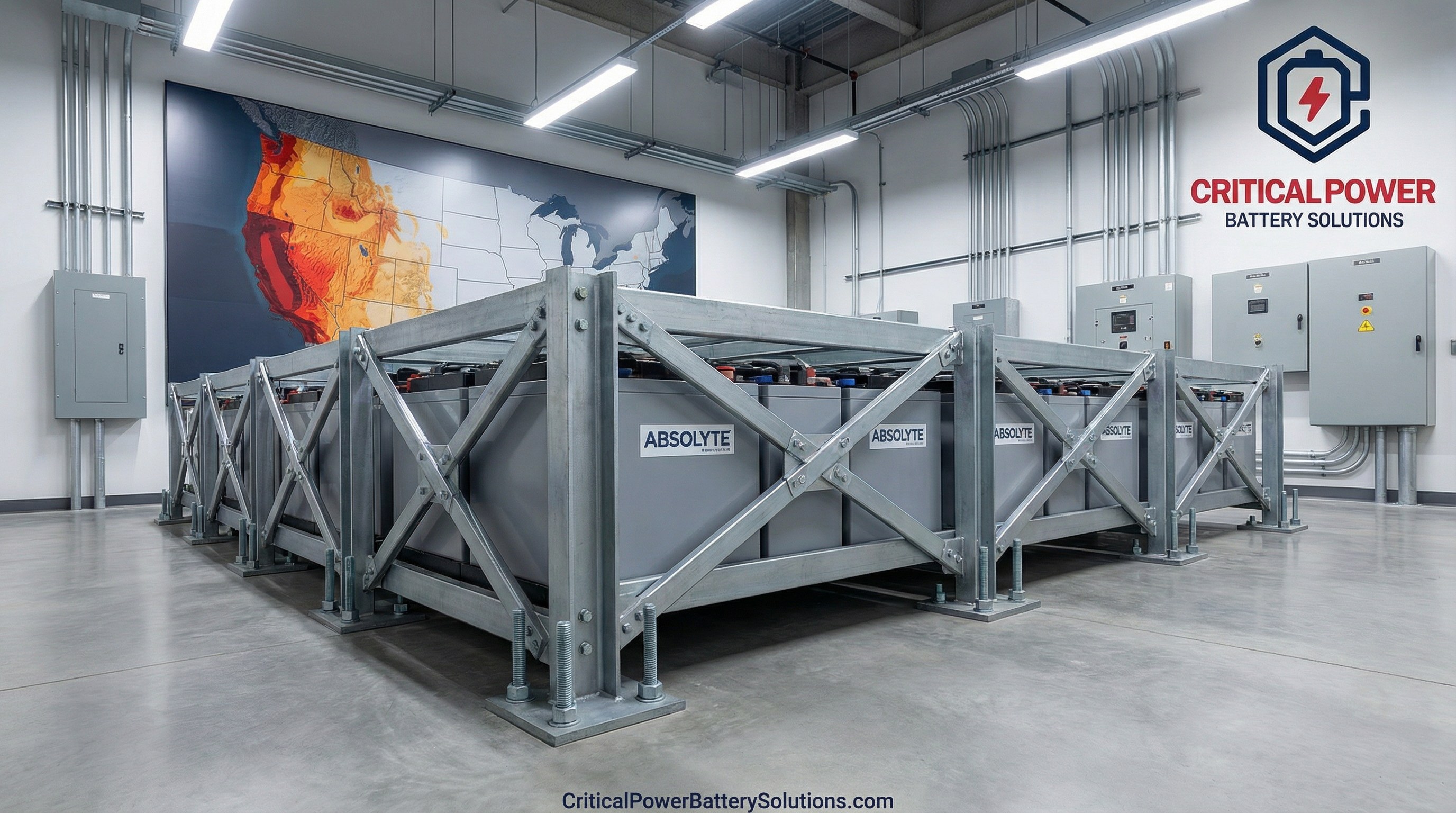
Absolyte Advantage: The Absolyte AGP’s modular steel tray design is inherently seismic-rated. The horizontal stacking creates a low center of gravity and a rigid structure that can withstand Zone 4 acceleration forces without massive external bracing. This makes it the preferred choice for battery rack systems in high-risk areas.
Flooded Challenge: Traditional tiered racks for flooded batteries (step racks) are top-heavy. Achieving Zone 4 compliance requires custom-engineered racks with heavy-duty anchoring and cross-bracing, significantly increasing the installation cost and footprint.
Climate Resilience (Freeze vs. Heat)
Temperature control is the single biggest factor in battery longevity.
Northern US (Freeze Risk): In unconditioned substations, flooded batteries risk freezing if they are deeply discharged, as the electrolyte becomes more water-like. While VRLA batteries are also affected by cold (loss of capacity), the immobilized electrolyte is more resistant to freezing damage at partial states of charge.
Southern US (Heat Risk): Heat is the enemy of VRLA. The Arrhenius equation indicates that for every 8°C (15°F) rise above 25°C, the life of a VRLA battery is cut in half. Flooded batteries, with their large volume of liquid electrolyte, have higher thermal mass and are slightly more forgiving of temperature excursions, provided water is replenished.
Recommendation: While often associated with cell tower batteries in remote telecom sites, the Absolyte AGP’s modular design is equally critical for space-constrained substations. However, for non-air-conditioned huts in the hot Southern US, the Flooded E-Series may offer better durability if maintenance crews can access the site.
Frequently Asked Questions
What is the difference between flooded and VRLA batteries?
The main difference is electrolyte management. Flooded batteries (vented) contain liquid acid and require regular watering and ventilation to manage off-gassing. VRLA (Valve-Regulated) batteries immobilize electrolyte in a gel or mat (AGM), requiring no watering and minimal ventilation, making them cleaner and easier to maintain.
Do VRLA batteries need maintenance?
Yes, but significantly less than flooded types. According to IEEE 1188, VRLA batteries require visual inspections and annual electrical testing (impedance/conductance) to detect internal dry-out or connection issues, even though they do not require fluid replenishment. Neglecting this testing can lead to unexpected failure.
Is spill containment required for VRLA batteries?
Generally, no, or minimal containment is required. Because the electrolyte is immobilized, VRLA batteries typically do not trigger the heavy secondary containment requirements (like berms) mandated for liquid-filled batteries under best practices derived from EPA 40 CFR 264.175. However, you should always verify compliance with local fire codes and environmental regulations.
What is the life expectancy of Stryten Absolyte batteries?
The design life is 20 years at 25°C (77°F). However, real-world service life typically ranges from 12–15 years depending on temperature control and discharge depth. Heat is the primary factor reducing this lifespan; operating consistently at 85°F can reduce life expectancy by several years.
Can I replace my flooded battery with an AGM battery?
Yes, but charger settings must be adjusted.VRLA battery vs flooded charging profiles differ significantly; AGM batteries require different charging voltages and float currents. Failure to adjust the rectifier/charger settings will likely damage the new AGM bank immediately through thermal runaway or under-charging.
Limitations, Alternatives & Professional Guidance
This guide compares AGM and flooded within the Stryten line. For an inter brand comparison of the Absolyte AGP against EnerSys, C and D, and NorthStar, see the industrial VRLA battery comparison.
Research Limitations
While Stryten Energy specifies a 20-year design life for both Absolyte and E-Series models, this is a laboratory standard based on ideal float conditions at 25°C. Real-world conditions, particularly in utility scale battery storage applications, often involve temperature fluctuations and cycling that can reduce service life. For a detailed ROI analysis, see our Absolyte GP Battery TCO & ROI Analysis.
Alternative Approaches
Lithium-Ion: For facilities requiring ultra-lightweight and compact solutions, Lithium-Ion is an emerging alternative. However, it introduces stricter fire suppression codes (NFPA 855) and higher upfront costs compared to lead-acid.
Nickel-Cadmium (Ni-Cd): For extreme temperature durability (-40°C to +60°C), Ni-Cd chemistry may be superior to both lead-acid options, though it comes with higher environmental disposal considerations.
Professional Consultation
Battery sizing is complex. Over-sizing wastes capital budget, while under-sizing risks critical load drops during outages. We recommend a professional IEEE 485 sizing calculation before purchasing to ensure the battery bank matches your specific load profile and autonomy requirements.
Conclusion
The choice between the Absolyte AGP and the Flooded E-Series is a trade-off between maintenance capabilities and environmental control. The Absolyte AGP excels in footprint efficiency, seismic readiness, and reduced maintenance labor, making it ideal for remote or confined sites. The Flooded E-Series remains a powerhouse for durability in accessible, climate-controlled environments where maintenance crews are readily available.
Ultimately, the right Stryten Energy battery is the one that aligns with your facility’s operational reality. Don’t guess on capacity or compliance.
Critical Power Battery Solutions offers free IEEE 485 Battery Sizing Reports to help you navigate these specifications. Contact our engineering team today to request your sizing report and ensure your Stryten Energy battery system is code-compliant.
References
- IEEE Standards Association. (2020). IEEE Std 450-2020: Recommended Practice for Maintenance, Testing, and Replacement of Vented Lead-Acid Batteries for Stationary Applications.Link to Standard
- IEEE Standards Association. (2005). IEEE Std 1188-2005: Recommended Practice for Maintenance, Testing, and Replacement of Valve-Regulated Lead-Acid (VRLA) Batteries for Stationary Applications.Link to Standard
- U.S. Environmental Protection Agency.40 CFR 264.175 – Containment.Link to Regulation
- International Code Council.International Building Code (IBC) – Seismic Design Categories.Link to ICC
- Stryten Energy.Absolyte AGP and E-Series Technical Data Sheets.Link to Stryten Energy