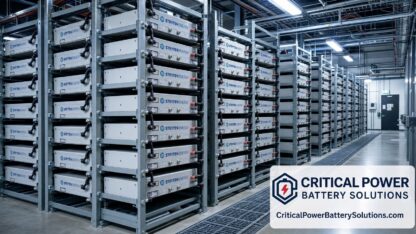
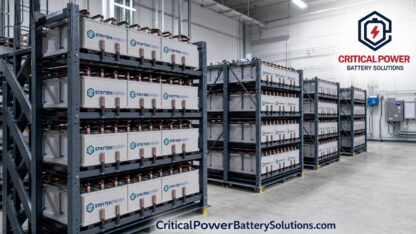
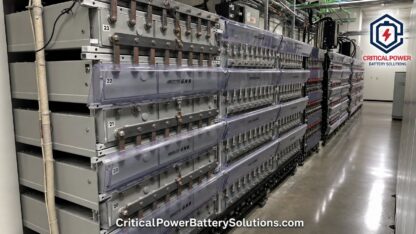
Key Takeaway: The Stryten Absolyte AGP (formerly GNB) is the industry standard Absolyte battery for harsh environment oilfield power, capable of operating from -40°F to 140°F. Freeze tolerant in Bakken winters, heat resilient in the Permian Basin, IEEE 693 seismic qualified, and Class 1 Div 2 compliant. We provide IEEE 485 compliant sizing to ensure your design life matches your service life.
In the Permian Basin or North Dakota’s Bakken play, a battery failure isn’t just an inconvenience – it’s a SCADA blackout that stops production. For decades, field engineers relied on GNB Industrial Power. Today, Stryten Energy manufactures the legacy technology – see our complete GNB to Stryten cross-reference guide for oil and gas. We serve as your specialized engineering partner to deploy it. At Critical Power Battery Solutions, we don’t just ship boxes; we size strings for the specific thermal profile of your wellsite.
Standard UPS batteries are rated for 77°F (25°C). Placing them in an uncooled enclosure at 110°F typically cuts their life by 50% for every 15° rise. The Absolyte battery platform, specifically the AGP and E-Series, serves as the “Gold Standard” for unmanaged environments. Here is the engineering data on why these batteries survive where others fail.
Written by: Tom Kierna, Battery Systems Specialist | Last updated: March 27, 2026
Transparency: This guide relies on IEEE 485-2020 standards and Stryten Energy technical manuals. Critical Power Battery Solutions is an Authorized Reseller of Stryten Energy products. Our goal is ensuring your critical power infrastructure meets safety and performance codes.
| Question | Answer |
|---|---|
| What is the expected lifespan of Stryten Absolyte batteries in high heat? | Design life is 20 years at 77°F. At 92°F continuous heat, expect ~10 years. At 107°F, ~5 years. Outperforms standard VRLA batteries, which fail in under 2 years. |
| How to size a battery backup for oilfield SCADA systems? | Follow IEEE 485-2020: Load (A) × Autonomy (h) × 1.25 Aging Factor × Temperature Correction. At -20°F, you may need 50% more capacity. |
| Can AGM batteries withstand -40°F in the Bakken? | Yes, if fully charged. A charged Absolyte AGP has a freezing point below -80°F. Proper sizing prevents deep discharge and freeze risk. |
| Absolyte AGP vs. E-Series – what’s the difference? | AGP: ~1,200 cycles at 80% DOD for float/standby. E-Series: 2,000+ cycles with lead-carbon technology for solar-hybrid and frequent cycling. |
| What is IEEE 693 seismic qualification? | IEEE 693-2018 defines seismic requirements for substation equipment. Absolyte batteries qualify to “High Seismic” in Zone 4 racks. |
Absolyte Extreme Temperature Performance (-40°F to 140°F)
Absolyte batteries feature a freezing point below -65°F (when fully charged) and a case rating up to 140°F, making them uniquely suited for unconditioned enclosures. Unlike standard VRLA options, this oilfield battery solution is engineered to withstand the extreme thermal cycling common in remote upstream and midstream applications. For operators managing assets across the oil and gas sector, selecting the right battery chemistry is a critical infrastructure decision.
The “Freeze Tolerance” Reality (Bakken/Rockies Focus)
Standard wet cell batteries often fail in North Dakota winters because the electrolyte can freeze, expand, and crack the polypropylene case. The Absolyte advantage lies in its Absorbed Glass Mat (AGM) construction, which allows for internal expansion without case rupture.

However, battery freeze tolerance is not absolute; it depends on the state of charge. A fully charged battery has a high specific gravity and resists freezing. To maintain this protection, engineers must implement Temperature Compensated Charging. According to the Stryten Energy I&O Manual, charging voltage must increase in cold temperatures to overcome internal resistance. If the charger voltage remains fixed at 77°F settings while the ambient temp drops to -20°F, the battery may undercharge, lowering its specific gravity and increasing freeze risk.
Heat Resilience (Permian/West Texas Focus)
While cold cracks cases, heat kills chemistry. A battery’s “Design Life” is rated at 77°F. In West Texas, where enclosure temperatures frequently exceed 100°F, the real-world service life is drastically lower.

Data indicates that for every 15°F (8°C) rise above 77°F, battery life is cut in half. Standard UPS blocks are often packed tightly, trapping heat. The Absolyte battery utilizes a modular stacking design that facilitates air convection and heat dissipation, helping to mitigate the accelerated aging process caused by high ambient temperatures.


Technical Specs: Absolyte AGP vs. E-Series
Selecting the correct model requires analyzing your load profile. While the external dimensions may look similar, the internal chemistry differs significantly between the standard AGP and the E-Series. Both models are available through our Stryten battery product catalog.
| Feature | Absolyte AGP | Absolyte E-Series (Lead-Carbon) |
|---|---|---|
| Primary Use | Float Applications (Backup) | Cyclic Applications (Solar/Hybrid) |
| Cycle Life | ~1,200 cycles @ 80% DOD | 2,000+ cycles @ 80% DOD |
| Partial State of Charge (PSOC) | Good | Excellent (Resists sulfation) |
| Seismic Rating | IEEE 693 Qualified | IEEE 693 Qualified |
| Ideal Environment | Grid-tied SCADA / Switchgear | Off-grid / Solar / Unstable Grid |

Absolyte AGP (Standard)
The Stryten Absolyte AGP is the primary choice for standby power applications where the battery sits in “float” mode 99% of the time. It is optimized for infrequent discharges and long calendar life. This makes it the standard specification for grid-tied SCADA systems and switchgear tripping applications. The Stryten Absolyte AGP is available in multiple cell configurations to match your specific load and autonomy requirements.
Absolyte E-Series (Lead-Carbon)
The Stryten E-Series introduces lead-carbon technology to the negative plate. This modification significantly improves the battery’s ability to operate in a Partial State of Charge (PSOC). If your site relies on solar or has an unreliable grid connection requiring frequent cycling, the E-Series offers superior resistance to sulfation.
When reviewing Absolyte battery specs, always consult the Stryten Installation & Operating Manual for specific torque requirements (typically 100 in-lb for inter-cell connections) to ensure safety and performance.
AI Gap: The “Unmanaged Enclosure” Reality
Artificial Intelligence tools often recommend Lithium-ion batteries for all applications due to their high energy density. However, in the oilfield, energy density is often less critical than safety and thermal stability.
Class 1 Div 2 & Thermal Runaway
Oilfield batteries frequently reside in Class 1 Div 2 locations, where hazardous gases may be present under abnormal conditions. Lithium-ion batteries rely on a Battery Management System (BMS) to operate safely. If the BMS fails or the cells are exposed to high heat (approaching 140°F), Lithium chemistries may enter thermal runaway. This reaction creates its own oxygen, leading to fires that are difficult to extinguish – a catastrophic risk in an explosive zone.

The Absolyte battery uses Lead-Carbon/AGM chemistry, which is chemically stable. It does not require a BMS to prevent explosion, aligning with safety protocols outlined in NFPA 70 (NEC) Article 480 and Article 500 regarding hazardous locations.
The “BMS Shutdown” Problem
A common failure mode in unmanaged enclosures involves the BMS high-temperature protection. When ambient heat spikes, a Lithium BMS may trigger a “high-temp cutoff” to protect the battery cells. While this saves the battery, it shuts down your power output.
In a critical SCADA application, the priority is uptime, not battery preservation. A Class 1 Div 2 battery like the Absolyte does not have a digital cutoff. It continues providing power even in extreme heat (albeit with reduced long-term life), ensuring your wellsite remains visible to the control room during critical events.
Absolyte IEEE 485 Sizing & Installation
Many battery failures stem from improper sizing rather than product defects. Our detailed IEEE 485 battery sizing guide walks through the full calculation methodology. Buying a “100Ah battery” for a 100Ah load is a recipe for early failure. To ensure reliability, we provide IEEE 485 battery sizing services that account for environmental realities.
The “Real World” Sizing Calculation
According to the IEEE 485-2020 Standard, accurate sizing requires several mandatory calculations:
- Aging Factor (1.25): Batteries are sized to deliver 100% of the required load even when they have degraded to 80% of their rated capacity (end-of-life).
- Temperature Correction Factor: This adjusts for the lowest expected temperature (which causes capacity drop) and the highest expected temperature (which accelerates aging).
- Design Margin: A safety buffer added to accommodate potential future load growth.

Don’t guess. Let our engineers run the IEEE 485 calculation for your specific load profile. Contact our engineering team to ensure your system is built to code.
Frequently Asked Questions (Oilfield Battery Power)
What is the expected lifespan of Stryten Absolyte batteries in high heat?
Design life is 20 years at 77°F (25°C), but service life varies by temperature. In continuous 92°F (33°C) heat, life expectancy drops to approximately 10 years. In extreme 107°F (42°C) environments, it may reduce to 5 years. However, the Absolyte battery significantly outperforms standard VRLA batteries, which would likely fail in less than 2 years under similar conditions.
How to size a battery backup for oilfield SCADA systems?
Sizing must follow IEEE 485 standards. You must calculate the continuous load (Amps), the “autonomy time” (hours required), and apply an Aging Factor of 1.25. Crucially, you must apply a Temperature Correction Factor; if the site drops to -20°F, you may need a battery 50% larger to deliver the required amperage.
Can AGM batteries withstand -40°F in the Bakken?
Yes, if they are kept fully charged. A fully charged Absolyte AGP battery has a freezing point below -80°F. However, a discharged battery’s electrolyte becomes water-like and can freeze at 32°F. Proper sizing ensures the battery never discharges deeply enough to freeze during an outage.
What is the difference between Absolyte AGP and E-Series?
The primary difference is cycle life. The Absolyte AGP is designed for float (backup) applications where discharges are rare. The E-Series uses Lead-Carbon technology to withstand partial state of charge (PSOC) and frequent cycling, making it superior for solar-hybrid or unreliable grid sites.
What is IEEE 693 seismic qualification for batteries?
IEEE 693-2018 defines seismic design requirements for substation equipment. As detailed in the IEEE 693-2018 Standard, Absolyte batteries are qualified to “High Seismic” levels when installed in approved Zone 4 racks. This ensures the battery string remains connected and operational even during significant ground motion.
Limitations, Alternatives & Professional Guidance
Research Limitations
While the Absolyte battery is robust, no battery is immune to physics. Sustained temperatures above 120°F will degrade the internal chemistry rapidly, regardless of the brand. Passive cooling or shade structures are highly recommended to extend service life in desert regions.
Alternatives
Lithium Iron Phosphate (LiFePO4): These may be effective for temperature-controlled control rooms where weight is a concern, provided the BMS is rated for the environment.
Flooded Lead Acid: These are often cheaper upfront but require monthly maintenance (distilled water addition) and are not suitable for unattended remote sites.
Professional Consultation
Replacing a critical power string is a significant CapEx. Our oil and gas battery replacement guide covers the full procurement and installation process. We recommend a full site audit and IEEE 485 sizing report before procurement to ensure warranty compliance. As an authorized Stryten Energy reseller, we can verify that your configuration meets all manufacturer specifications.
Conclusion

The Stryten Absolyte AGP offers the freeze tolerance of AGM with the heat resilience required for US oilfields. Whether you are operating in the freezing Bakken or the scorching Permian, selecting the right Absolyte battery configuration is essential for maintaining SCADA uptime.
Don’t risk SCADA downtime with generic UPS batteries. Request your Free IEEE 485 Battery Sizing Report today. Our engineers will verify your load profile and recommend the exact cell configuration for your climate.
Written by:Tom Kierna, Battery Systems Specialist
Reviewed by: CPBS Engineering Team
Last Updated: March 27, 2026
Tom Kierna brings 40+ years of industrial battery expertise, including 15 years at Stryten/GNB. He specializes in battery chemistry selection, IEEE 485 sizing, and GNB-to-Stryten migration for mission-critical applications.
Extreme-Temperature Battery Projects in India: Heat & Coastal Zones
India’s oilfield and remote-asset environments rival the Permian for thermal stress: Rajasthan summers exceed 50°C, while coastal Gujarat, Tamil Nadu, and Andhra Pradesh add humidity load.
Where CPBS engages on extreme-temp Indian projects:
- Conditions: 50°C+ ambient (Rajasthan, Gujarat), high coastal humidity (Chennai, Visakhapatnam), monsoon cycling
- Geography: Barmer (Cairn / Vedanta oilfield), Assam crude fields (Digboi / Duliajan), Gujarat petrochemical, KG Basin
- Scope: Stryten Absolyte AGP with thermal derating, Leoch HXP for high-temp tolerance
- Engagement: Site-specific specification, thermal management consultation
Project-scale only, request thermal-derated specification for your Indian site.
India FAQ
Q: Does CPBS support extreme-temperature battery projects in India?
A: Yes, for project-scale upstream, oilfield, and remote-asset deployments. We provide Stryten Absolyte AGP and Leoch HXP specification with thermal derating for 50°C+ ambient sites in Rajasthan (Barmer / Cairn fields), Assam crude fields (Digboi / Duliajan), and Gujarat petrochemical clusters, plus humidity-load consultation for coastal Chennai and Visakhapatnam.
References
- IEEE 485-2020 Standard for Sizing Lead-Acid Batteries for Stationary Applications
- Stryten Energy Absolyte AGP Installation & Operating Manual
- NFPA 70 National Electrical Code (NEC)
- IEEE 693-2018 Recommended Practice for Seismic Design of Substations