Quick Answer. Replace your telecom Absolyte string when any one of these is true:
- Capacity test result is below 80% of rated Ah
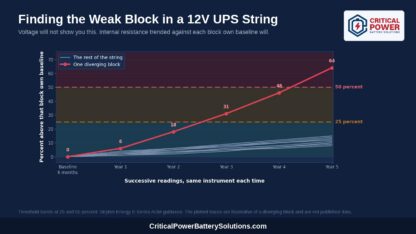
- Internal resistance has risen more than 20% above the commissioning baseline
- String age plus cabinet operating temperature predicts end of life within 12 months
Voltage readings alone never decide. Start the procurement clock six months before projected end of life, not six weeks.
Telecom site managers running 10 to 15 year old VRLA backup strings face a budget question every fiscal cycle. Stryten Energy (formerly GNB Industrial Power, a division of Exide Technologies) built most of the Absolyte cells installed in North American central offices, remote terminals, RAN huts, and cable headends between 2008 and 2018. The string still looks fine on a multimeter. The PM report says “monitor.” A vendor says “replace now.” When is the right call?
This guide is the WHEN. It hands the HOW to the field guide at how to replace GNB Absolyte batteries and the test procedure to the UPS battery testing guide. If you are still trying to interpret a voltage reading or decode a label date, read is your GNB Absolyte battery really bad and how old are my GNB Absolyte batteries first.
The short answer: three triggers, in priority order
Replace the string when one trigger fires. Do not wait for two. Each trigger is a leading indicator of capacity loss that becomes irreversible inside 12 months.
- Capacity test below 80% of rated Ah. The hard threshold from IEEE 1188. At 80% the cell has lost a quarter of its useful runtime and is now declining on an accelerating curve. A current 80% string will not pass a retest in 12 months.
- Internal resistance more than 20% above commissioning baseline. Ohmic rise tracks dry-out, grid corrosion, and active material shedding before capacity collapses. A 20% IR rise is your six month warning.
- Age plus cabinet operating temperature predicts end of life within 12 months. Cross-reference string age against the temperature-adjusted service life table below. If projected EOL is inside 12 months, start the procurement clock now.
One trigger is enough. Two triggers means you are already late and may need an expedited build.
Why the “10 year rule” misleads on Absolyte telecom strings
Absolyte battery Design life is not service life. The Stryten Absolyte AGP carries a 20 year design life rating. That number is a manufacturer specification measured at 25 C float in a controlled environment. Real telecom enclosures rarely operate at 25 C year round.
Two terms a site manager must keep separate:
- Absolyte battery Design life. The published manufacturer figure. Tested under controlled lab conditions at 25 C float voltage. For Stryten Absolyte AGP this is 20 years.
- Absolyte battery Service life. The actual years the string delivers backup capacity at or above your runtime requirement. Set by your specific operating temperature, depth of discharge, float voltage accuracy, and cycle history.
The Arrhenius rule governs the gap between the two. Every 10 C of sustained temperature above 25 C roughly halves the service life of a VRLA battery. Apply this to common telecom enclosures:
| Cabinet operating temperature | Expected service life | Typical enclosure |
|---|---|---|
| 25 C (77 F) | 17 to 20 years | Climate controlled central office |
| 30 C (86 F) | 12 to 14 years | Partially conditioned hut |
| 35 C (95 F) | 8 to 10 years | Outdoor cabinet, no AC |
| 40 C (104 F) | 5 to 7 years | Summer cabinet peak, RAN base |
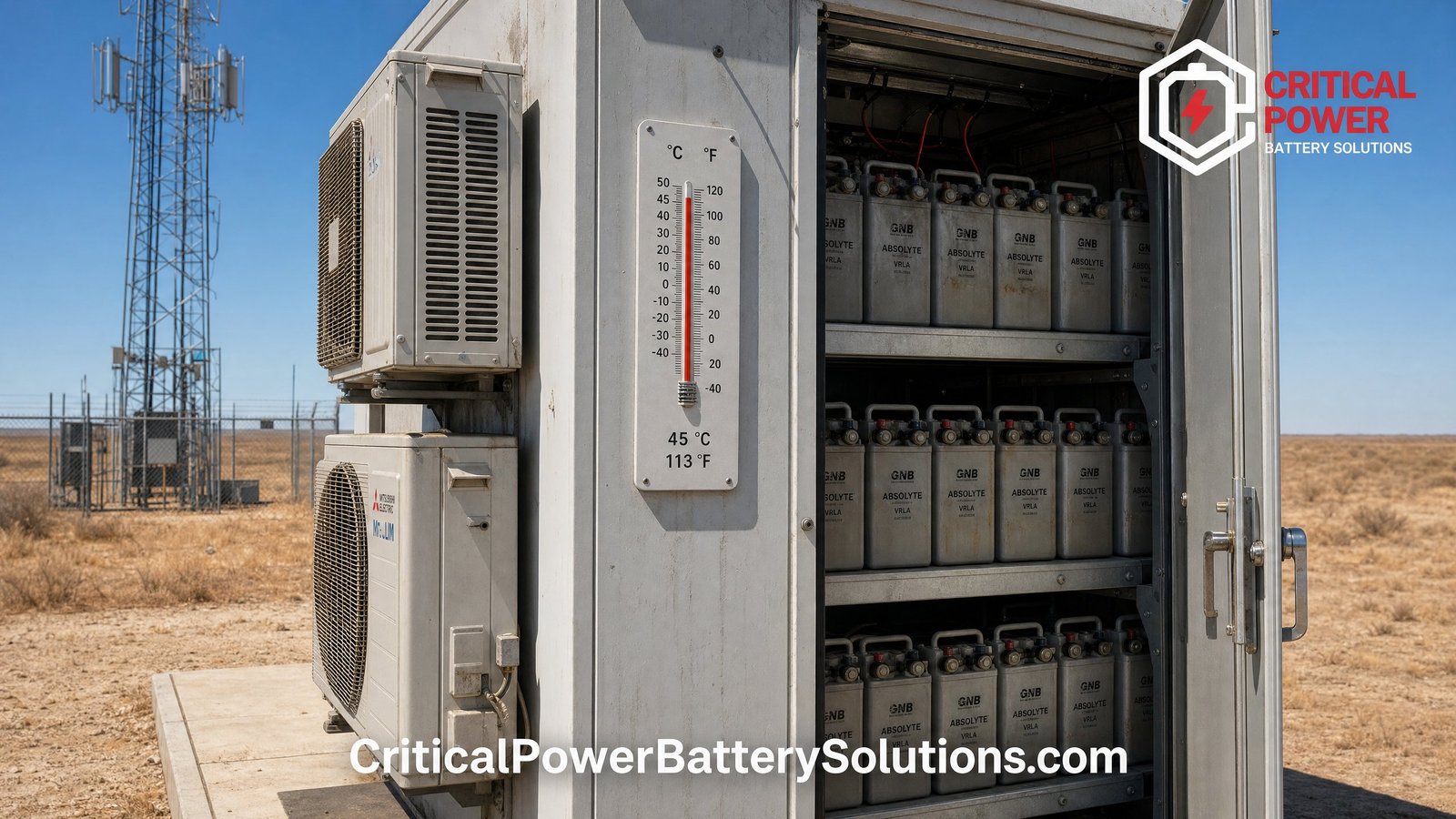
The float voltage correction matters too. Stryten specifies a temperature compensation coefficient of 3 mV per degree F per cell, or 5.5 mV per degree C per cell. A 24 cell string running at 35 C without temperature compensated charging is overcharging by roughly 1.3 V across the string year round. That accelerates dry-out independent of the Arrhenius effect.
Most telecom Absolyte strings deliver 8 to 15 years of service, not 20. The brand transition does not change this. GNB Absolyte GP, Absolyte IIP, and current Stryten Absolyte AGP are the same chemistry from the same plant per the Stryten Manufacturer’s Declaration. See the GNB to Stryten history for the full continuity record.
Four telecom load profiles and how each affects service life
Your enclosure type determines which end of the service life range you land on. Use this section to set realistic expectations before you test.
Profile 1: Central office, climate controlled, 8 hour backup
- Cabinet temperature: 22 to 25 C year round
- Discharge events: rare, typically less than two per year
- Depth of discharge: shallow, 10 to 30%
- Expected service life: 17 to 20 years, closest to design life
- Watch for: HVAC failure events that briefly push the room above 30 C
Profile 2: Remote terminal cabinet, no climate control
- Cabinet temperature: 35 to 45 C summer peaks, 5 to 15 C winter
- Discharge events: 2 to 6 per year typical, depending on grid stability
- Depth of discharge: moderate, 20 to 50%
- Expected service life: 6 to 9 years, well short of design life
- Watch for: thermal cycling stress, accelerated dry-out, valve actuation events
Profile 3: Tower hut or RAN base, partial climate control
- Cabinet temperature: 25 to 35 C, dependent on cooling redundancy
- Discharge events: 3 to 8 per year, often longer durations during outages
- Depth of discharge: moderate to deep, 30 to 70% on extended events
- Expected service life: 8 to 12 years
- Watch for: deep discharge recovery time, cell voltage divergence after long outages
Profile 4: Cable or broadband headend, conditioned facility
- Cabinet temperature: 20 to 27 C
- Discharge events: 1 to 4 per year
- Depth of discharge: shallow to moderate, 10 to 40%
- Expected service life: 14 to 18 years
- Watch for: high ambient electronics heat that pushes cabinet temp above room temp
The deeper insight. Site profile is a stronger predictor of replacement timing than calendar age. A 12 year old central office string may still have five years of runway. A 7 year old outdoor cabinet string may already be at 70% capacity.
The replacement triggers that actually work
Five measurable indicators decide replacement timing. Voltage is not on this list. These are concept level; the IEEE 1188 test procedure that produces them lives at the UPS battery testing guide.
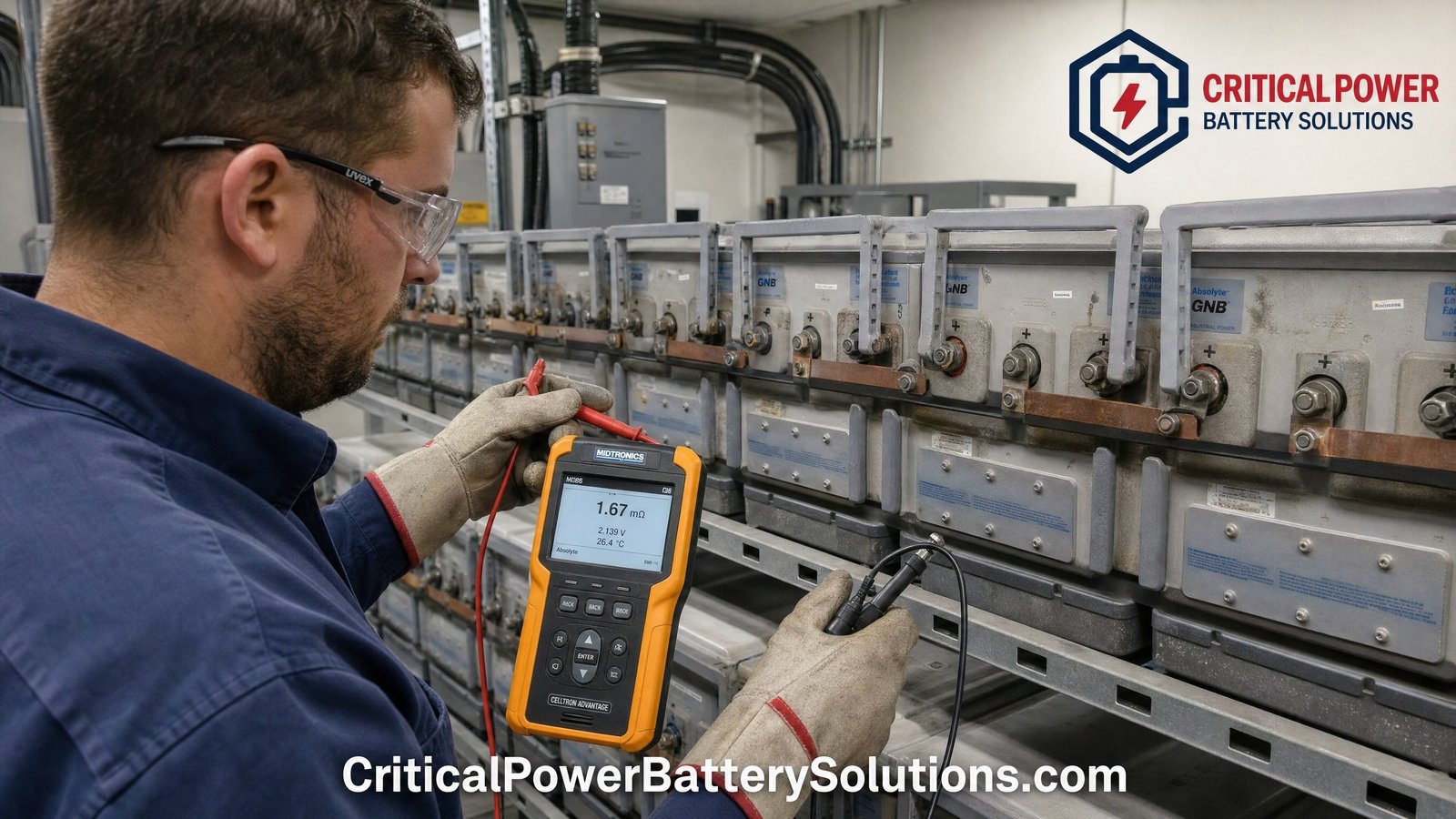
- Capacity test below 80% of rated Ah. The single most important number. Run a timed discharge at the 8 hour rate to a 1.75 to 1.94 VPC cutoff. Compare delivered ampere-hours to the nameplate. Below 80% = replace.
- Internal resistance or impedance more than 20% above baseline. Measure with an IR meter at the cell or jar level. Trend against the commissioning baseline, not against a generic spec. A 20% rise is the IEEE 1188 action threshold for end-of-life monitoring. Cross-reference the IR measurement guide for procedure detail.
- Individual cell voltage divergence under load. During a discharge test, weak cells drop voltage faster than the rest of the string. A spread greater than 0.1 V across cells at the midpoint of an 8 hour run indicates one or more cells approaching failure.
- Dry-out evidence. Case bulging, intercell connector corrosion, persistent intercell voltage drift on float, or detectable heat from a specific jar. Visible dry-out is late stage. Schedule replacement immediately.
- Thermal runaway warning signs. Float current rising at a stable temperature, jar surface temperature elevated above ambient, valve actuation residue around the vent. Thermal runaway is an outage-and-fire risk. Take the string offline and replace.
The triggers that do NOT work and why owners get burned
Every false reassurance on this list has put a telecom site into an outage. Treat them as informational only, never as a replacement decision.
- Float voltage is “normal.” A failing VRLA cell holds float voltage right up to the point of collapse. Float is a charge balance indicator, not a capacity indicator. See why voltage misleads on sealed VRLA for the underlying chemistry.
- Open circuit terminal voltage is “normal.” A dry cell can read 2.10 to 2.13 V with no load present and deliver zero capacity under a 30 amp draw. Open circuit voltage measures surface charge, not stored energy.
- The string “still holds a charge.” A 30 second light load test or a brief utility outage that the string rode through does not measure 8 hour backup capacity. A 60% capacity string can carry a 10% load for five minutes and still fail a real test.
- Visual inspection “looks fine.” Sealed VRLA cells hide nearly all degradation internally. No visible electrolyte to check, no plate sulfation to see, no obvious external sign of capacity loss until very late stage.
- Hydrometer or specific gravity reading. Hydrometers cannot read sealed VRLA at all. The electrolyte is absorbed in the AGM glass mat and there is no fill port. Any vendor pulling out a hydrometer on an Absolyte string does not understand the chemistry.
If your current PM vendor relies on any of these five, ask for a capacity test or IR trend instead. Insist on a measurement traceable to IEEE 1188.
The Absolyte battery procurement timeline: start the clock 6 months before EOL
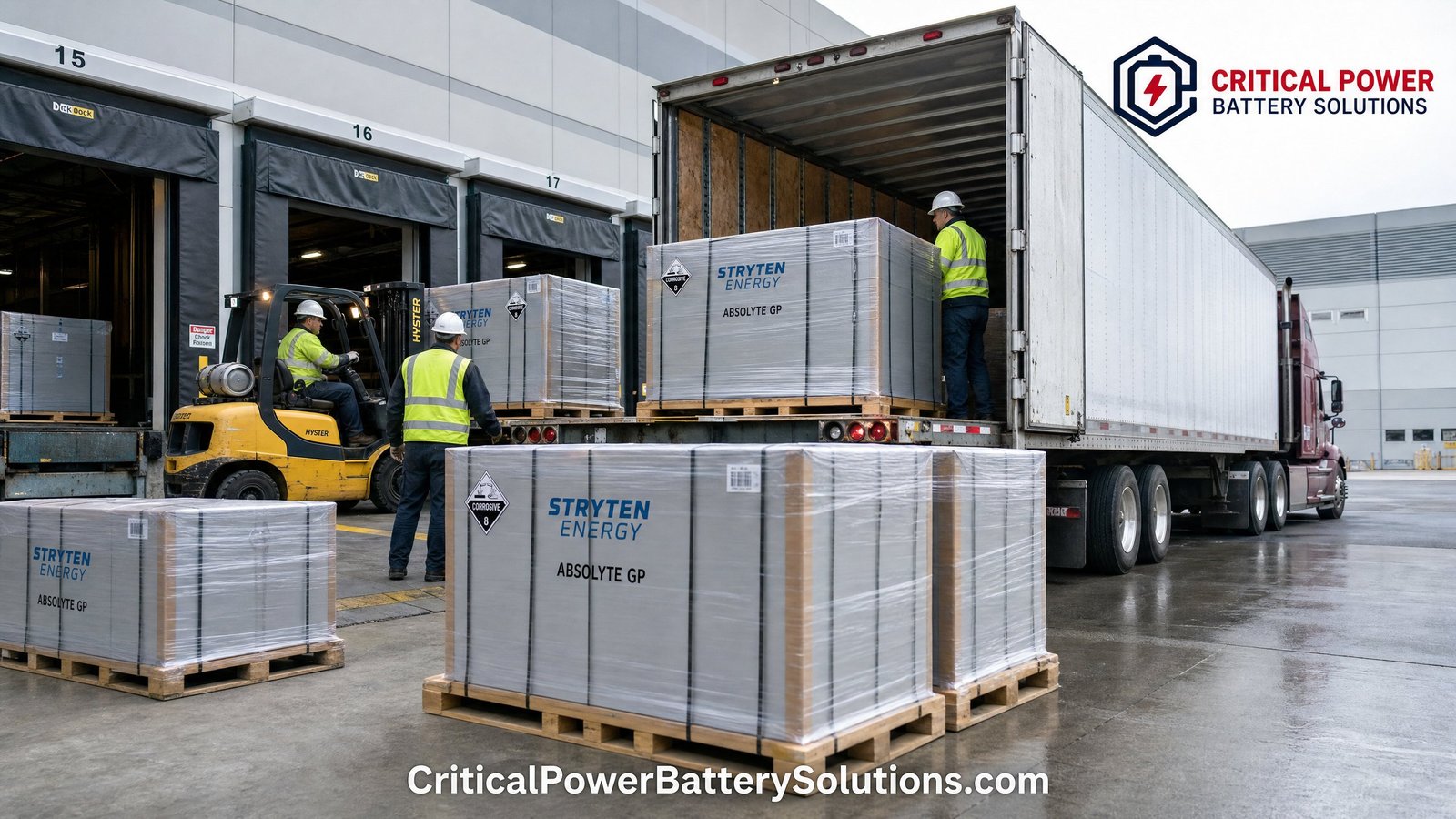
From “the string needs replacement” to a new Stryten Absolyte AGP installed is 8 to 14 weeks under normal conditions. Expedited builds compress this but cost a premium. Plan the procurement clock to start at least six months before projected end of life.
| Phase | Typical duration | What happens |
|---|---|---|
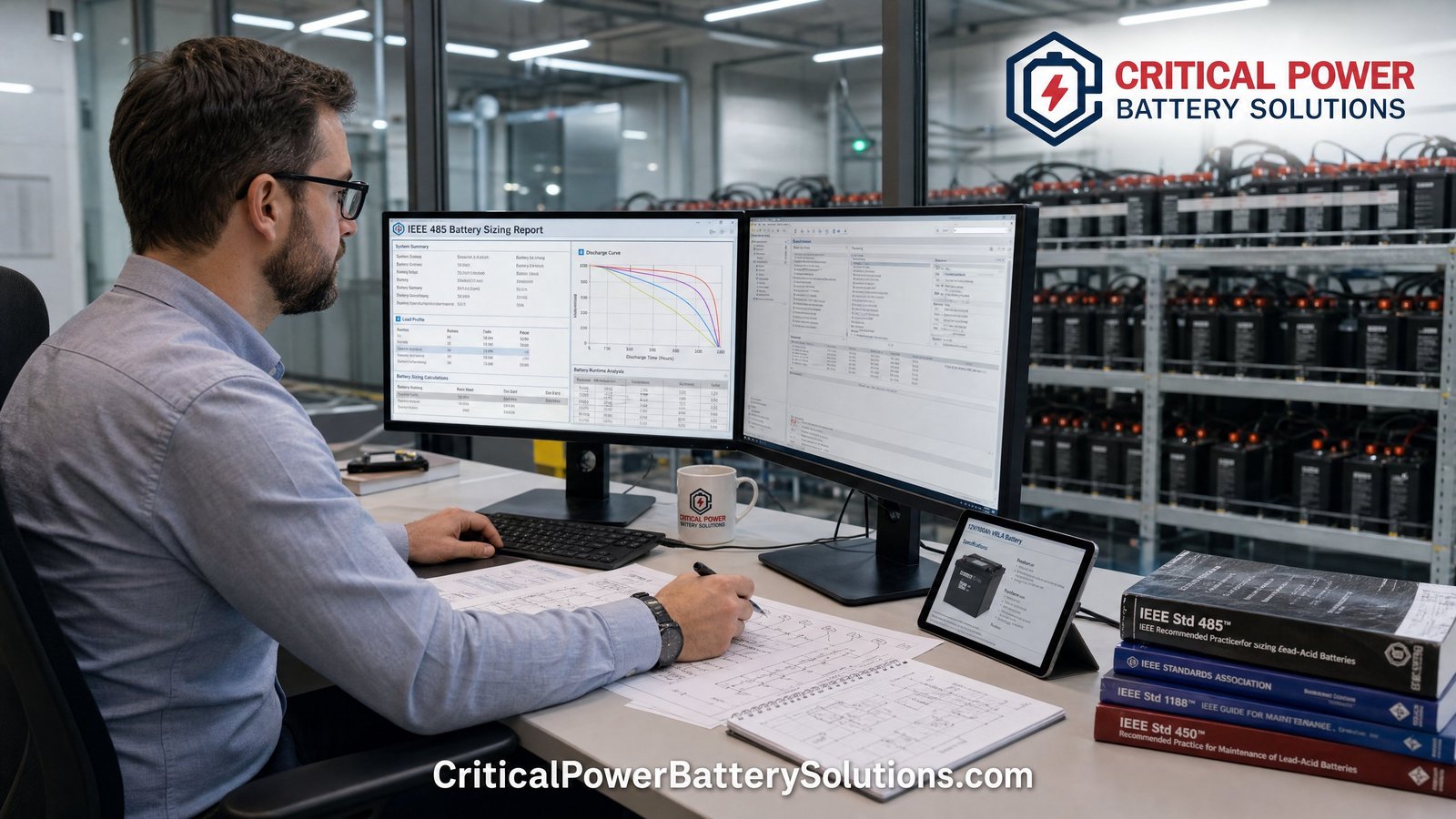
| Baseline test and sizing | 1 to 2 weeks | Independent capacity test, IR trend, load and runtime audit, IEEE 485 sizing recheck |
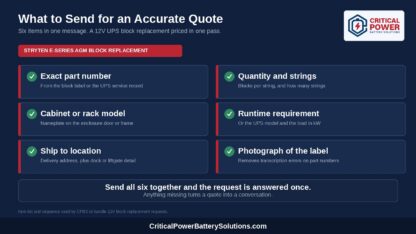
| RFQ and approval | 2 to 4 weeks | Cross-reference to current Stryten part numbers, quote, internal procurement approval |
| Manufacturer lead time | 4 to 6 weeks | Stryten production and finishing for sized order quantities |
| HazMat freight | 1 to 2 weeks | DOT compliant freight from plant to site, often pallet level |
| Install scheduling | 1 to 2 weeks | Site access, crew window, old string disposal coordination |
| Total | 8 to 14 weeks | Build six months of float into the schedule |
Why start so early. A string declining on the IR curve does not wait for your fiscal calendar. Capacity loss between the 80% threshold and a runtime failure can compress to 90 days under heat. A six month runway gives you room for one expedited contingency without paying rush premiums.
Whole Absolyyte string vs Absolyte cell replacement: when is partial defensible
Default to full string replacement on Absolyte strings older than 8 years. Partial replacement is defensible only in narrow cases.
Why cell swap fails fast on aging strings:
- IR mismatch pulls the new cell into early failure. A new cell at 0.20 milliohm paired with eight year old cells at 0.45 milliohm forces the new cell to carry uneven float and discharge current. The new cell ages two to three times faster than its nameplate.
- Voltage imbalance under load. A new cell rated for full Ah cannot deliver against partner cells already at 75% capacity. The string still fails the next capacity test.
- Warranty risk. Stryten warrants matched-age strings, not mixed-age installations. A partial swap may void warranty on the new cells.
- No money saved over a full life cycle. Two partial replacements in 18 months cost more in labor and HazMat freight than one full string replacement plus a fresh 8 to 15 year clock.
Partial replacement is defensible only when:
- The string is less than 3 years old
- One or two specific cells failed from a clear external cause (manufacturing defect, intercell connector failure, isolated mechanical damage)
- The remaining cells still test within 5% IR variance of each other
- Stryten or an authorized engineer signs off on the partial in writing
For aging strings, the math always favors full replacement. See the Absolyte total cost of ownership analysis for the financial logic.
How to read a “replace now” PM report like a skeptic
A credible “replace now” PM report contains specific measurements and references a baseline. A vague report is a sales pitch. Use this checklist when a vendor sends you a recommendation.
A credible PM report includes:
- A timed discharge capacity test result expressed as a percentage of rated Ah, with the discharge rate (8 hour, 4 hour, etc.) and the cutoff voltage specified
- Cell-level or jar-level internal resistance values in milliohms, with the baseline value the trend is measured against
- Cell voltage readings on float and under load, ideally at the midpoint of a discharge test, not just open circuit
- Cabinet temperature data from a logger, not a one-time spot reading
- String age and serial or date code documentation tied to the actual cells on site, not assumed
- Explicit reference to IEEE 1188 thresholds (80% capacity, 20% IR rise) as the decision basis
- A specific failure mode identified (dry-out, grid corrosion, sulfation, thermal runaway risk), not just “battery aged out”
If the report relies on float voltage, terminal voltage, or “the battery looks tired,” request a capacity test before approving the replacement. An independent baseline test costs a fraction of an unnecessary string replacement.
The decision checklist: 8 questions to answer before you order
Walk through this checklist with your latest test data in hand. If you cannot answer a question, that is the first thing to fix.
- How old is the string in years, measured from the manufacture date code, not the install date?
- What is the average cabinet temperature over the last 12 months, from a logger, not a guess?
- What was the most recent capacity test result as a percentage of rated Ah, and when was it run?
- What was the most recent IR or impedance reading per cell, and how does it compare to the commissioning baseline?
- What is the cell voltage spread under load at the midpoint of a discharge test?
- Is the float voltage temperature compensated at 3 mV per degree F per cell, and is the compensation tracking actual cabinet temperature?
- Has the string been maintained per the Stryten Absolyte AGP maintenance schedule for its full service life?
- What is the consequence of a single 8 hour outage at this site if the string fails to deliver?
If three or more of these questions return uncertain answers, the first action is a baseline capacity test, not a replacement order.
Where Critical Power Battery Solutions fits
CPBS is the independent second opinion before you commit to a replacement, and the authorized Stryten reseller if you confirm one is needed. Tom Kierna has 40+ years in industrial batteries, including 15 years inside GNB and Stryten. He provides vendor-neutral baseline testing and replacement scoping. Telecom industry background here.
- Independent baseline capacity test. No string sold during the assessment. The test result decides whether replacement is warranted, not a sales script.
- Authorized Stryten Energy reseller. If the test confirms end of life, CPBS supplies true like-for-like Stryten Absolyte AGP cross-references for legacy GNB Absolyte GP, IIP, and current AGP part numbers.
- ATS parent company. Critical Power Battery Solutions is a specialized division of Advanced Technical Services Inc. (ATS), founded 1981, ISO 9001 certified, family-owned, headquartered in the Chicago area.
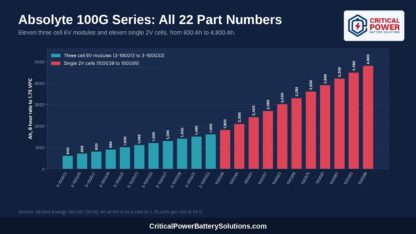
- Product page reference. Full Stryten E-Series Absolyte AGP specifications for cross-reference and sizing.
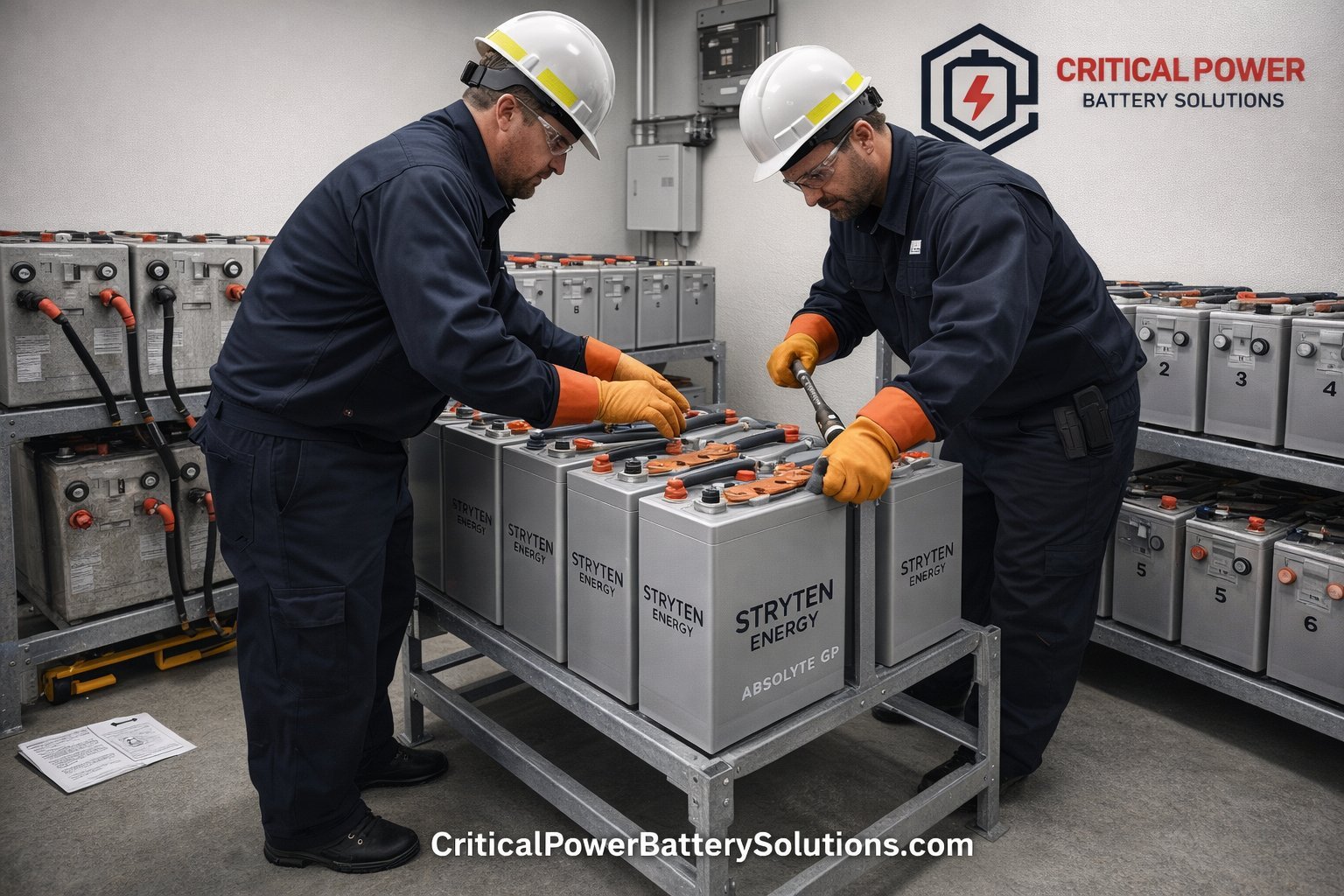
Next step: book an independent baseline test
If your string is over 8 years old and you do not have a current capacity test on file, the next action is a baseline test, not a purchase order.
- Call Tom Kierna direct at 630-984-9718
- Email sales@criticalpowerbatterysolutions.com
- Or use the consultation prep guide to gather the data Tom will ask for, then send through the contact form
The baseline test answers two questions in one visit: does this string still have runway, and if not, what is the like-for-like Stryten Absolyte AGP cross-reference quote and project scope.


Frequently Asked Questions
How often should telecom backup batteries be replaced?
Replace telecom VRLA strings when a capacity test reads below 80% of rated Ah, internal resistance rises more than 20% above baseline, or age plus cabinet temperature predicts end of life within 12 months. Calendar age alone is not a reliable trigger. Most telecom Absolyte strings deliver 8 to 15 years depending on cabinet temperature, not the 20 year design life.
When should you replace GNB Absolyte telecom batteries?
Replace GNB Absolyte (now Stryten Absolyte AGP) strings on the same three triggers as any VRLA: capacity below 80%, IR more than 20% above baseline, or projected end of life within 12 months. The GNB to Stryten rebrand did not change the chemistry; the same decision rules apply to GNB Absolyte GP, IIP, and current Stryten AGP cells.
What is the typical service life of telecom VRLA backup batteries?
Telecom VRLA service life ranges from 5 to 20 years depending on operating temperature. Climate controlled central offices deliver 17 to 20 years. Partially conditioned huts deliver 12 to 14 years. Outdoor cabinets average 8 to 10 years. Hot summer-peak cabinets can drop to 5 to 7 years. Service life halves for every 10 C above 25 C float.
What are the signs a telecom backup battery is failing?
Reliable failure signs are capacity below 80%, IR rise above 20%, cell voltage divergence under load, case bulging, intercell voltage drift, and float current rising at stable temperature. Float voltage normal, open circuit voltage normal, and “still holds a charge” are not reliable indicators. A failing VRLA cell holds float voltage until collapse.
Does the FCC or NEBS specify a telecom battery replacement interval?
Neither the FCC nor Telcordia NEBS specifies a fixed replacement interval. Both reference IEEE 1188 condition-based criteria: capacity below 80% and IR rise above 20%. NEBS Level 3 environments require condition monitoring rather than calendar replacement. Decisions are driven by measured battery condition, not age in years.
What is the difference between design life and service life for telecom batteries?
Design life is the manufacturer’s lab figure at 25 C float; service life is the actual delivered runtime at your specific cabinet temperature, depth of discharge, and float accuracy. Stryten Absolyte AGP has a 20 year design life and typically delivers 8 to 18 years of telecom service life depending on enclosure conditions.
Can you wait for failure or must you replace on schedule?
Do not wait for failure on a telecom backup string. A single 8 hour outage when the string fails to deliver risks site downtime, SLA penalties, and equipment damage. Replace proactively when any one of the three triggers fires. The 6 month procurement runway is the buffer between detection and outage.
How does cabinet temperature affect telecom battery replacement timing?
Cabinet temperature is the single largest variable in service life. Every 10 C above 25 C roughly halves the service life of a VRLA string (Arrhenius rule). A 35 C cabinet cuts a 20 year design life to roughly 8 to 10 years. A 40 C cabinet cuts it to 5 to 7 years. Temperature data from a logger is essential to replacement timing decisions.
What does a credible “replace now” PM report contain?
A credible report contains a timed capacity test result as a percentage of rated Ah, cell-level IR values trended against baseline, cell voltage under load, cabinet temperature data, and explicit reference to IEEE 1188 thresholds. Reports that rely on float voltage, visual inspection, or “battery looks tired” without measurements should be challenged before approval.
How long does Stryten Absolyte AGP actually last in a telecom site?
Stryten Absolyte AGP delivers 8 to 15 years in typical telecom service, against a 20 year design life rating. Climate controlled central offices reach 17 to 20 years. Partially conditioned RAN huts average 8 to 12 years. Outdoor cabinets without AC average 6 to 9 years. Float voltage temperature compensation at 3 mV per degree F per cell extends life.
Should you replace the whole telecom string or just bad cells?
Replace the whole string on Absolyte strings older than 8 years. Partial replacement fails fast on aging strings due to IR mismatch and voltage imbalance under load. Partial swap is defensible only on strings less than 3 years old with one or two cells failed from a clear external cause and remaining cells within 5% IR variance.
How far in advance should you start the procurement clock for a telecom battery replacement?
Start the procurement clock 6 months before projected end of life. The full timeline from baseline test to installed string is 8 to 14 weeks under normal conditions. The 6 month buffer covers baseline testing, RFQ approval, Stryten manufacturer lead time, HazMat freight, and install scheduling without paying expedited build premiums.
References
- IEEE 1188-2025 Recommended Practice for Maintenance, Testing, and Replacement of Valve-Regulated Lead-Acid Batteries. IEEE Standards Association.
- Telcordia GR-4228 Telecommunications Backup Battery Performance Requirements. iconectiv (Telcordia).
- Stryten Energy Absolyte AGP product specifications. Stryten Energy.
- Manufacturer’s Declaration of GNB Absolyte to Stryten Absolyte AGP design continuity, Michael Berger, Director of Engineering, Stryten Energy, August 17, 2023.
Written by Tom Kierna. Battery Systems Specialist at Critical Power Battery Solutions, a specialized division of Advanced Technical Services Inc. (ATS). 40+ years in industrial batteries, including 15 years at GNB and Stryten. Direct line 630-984-9718, sales@criticalpowerbatterysolutions.com. LinkedIn. Published May 28, 2026.