🎯 Quick Answer
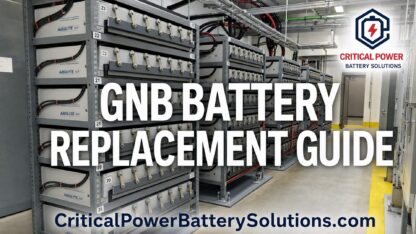
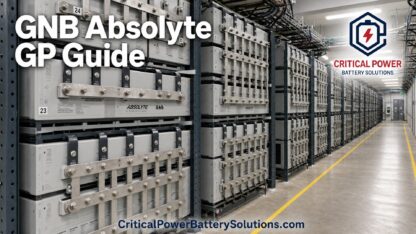
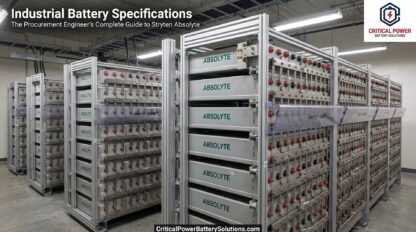
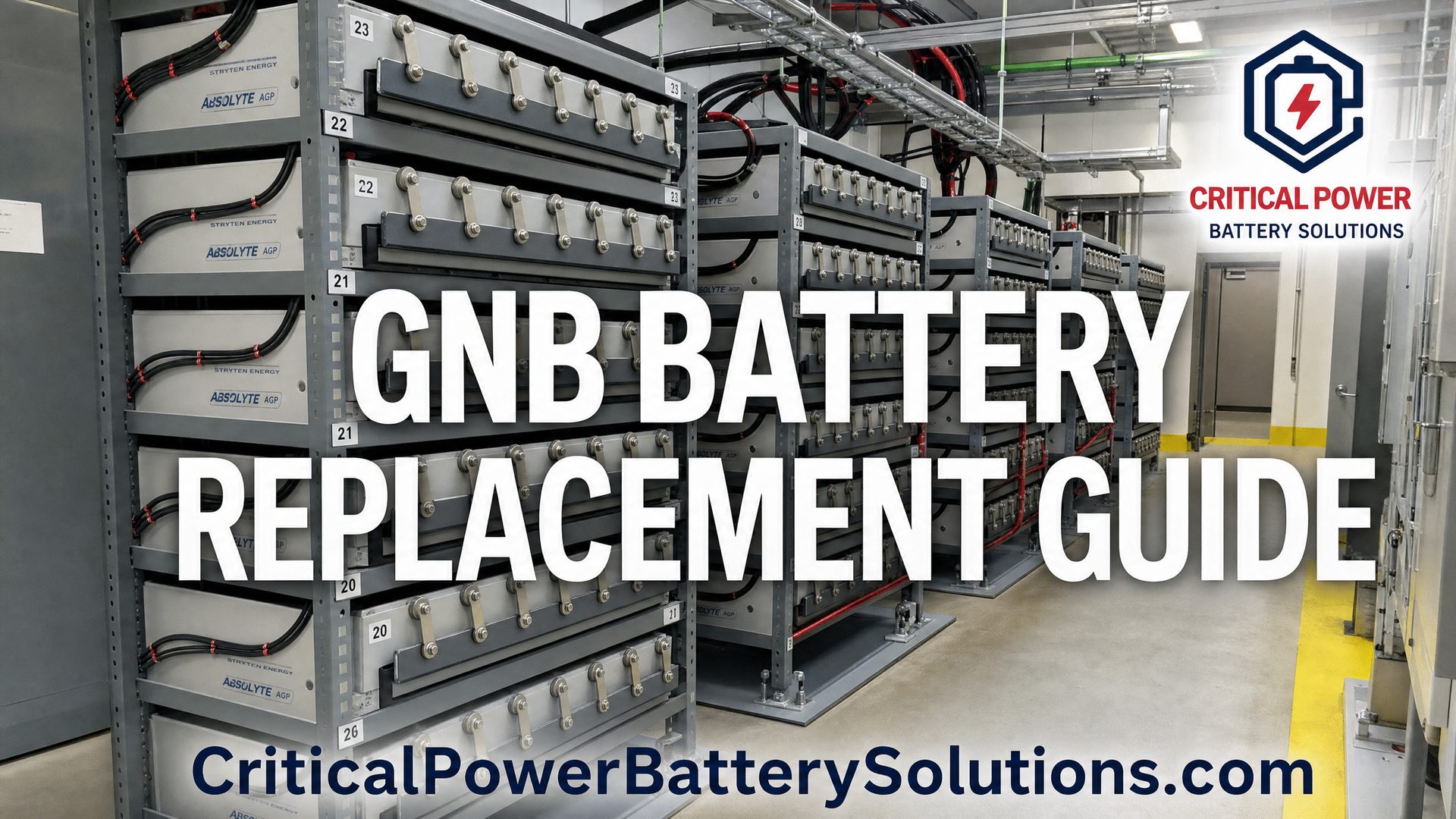
A GNB Absolyte to Stryten AGP replacement is treated as a compliance event by most US Authorities Having Jurisdiction (AHJs), not a like-for-like swap. Three documents typically clear an audit: a Manufacturer’s Declaration of Design Continuity from Stryten Energy proving the new cell is chemically and dimensionally identical to the legacy GNB Absolyte cell, UL94 V-0 container verification for fire marshal sign-off under NEC Article 500, and updated seismic anchoring documentation showing the rack meets current International Building Code (IBC) requirements rather than legacy Uniform Building Code (UBC) provisions.
GNB Absolyte Compliance – Key Facts at a Glance
- Brand transition: Stryten Energy acquired GNB Industrial Power’s industrial battery portfolio from Exide Technologies in 2020. The Absolyte product line continues under Stryten as Absolyte AGP.
- Design continuity: Stryten Absolyte AGP is built to identical core specifications as legacy GNB Absolyte GP – 2V cells, AGM construction, 100-3,600 Ah capacity range, 20-year design life at 25°C.
- Container compliance: Flame-retardant polycarbonate housing rated UL94 V-0 – the spec most US fire marshals require for stationary VRLA installations under NEC Article 500.
- Seismic standard: Absolyte AGP racks are qualified to IEEE 693 Zone 4 and the current IBC anchoring requirements, replacing legacy UBC seismic provisions.
- Sizing standard: IEEE 485-2020 governs sizing for stationary lead-acid batteries used in standby applications.
- Maintenance standard: IEEE 1188 governs ongoing testing for VRLA stationary batteries.
- Three documents an AHJ typically requests: Manufacturer’s Declaration of Design Continuity, UL94 V-0 verification letter, and IBC-compliant seismic anchoring calculations.
- Authorized procurement: Required to access OEM technical data, design-continuity letters, and warranty pass-through.
- Common audit failure: Mounting new Stryten cells in legacy UBC-anchored racks without filing updated IBC anchoring calculations.
- Engineering support: CPBS provides IEEE 485 sizing reports, UL94 V-0 documentation packages, and IBC seismic calculation worksheets as part of engineered replacements.


Why GNB Absolyte Compliance Documentation Matters
Most facility teams discover the compliance gap late. A GNB Absolyte string reaches end of life, a 1:1 Stryten AGP replacement is sourced, and an inspector then asks for the paperwork that proves the new system meets current code. Without the right documentation on file, an AHJ can hold the system out of service or require a full re-engineering of the battery room.
The risk is concentrated in three places: design continuity, fire safety, and seismic anchoring. Every other element of an Absolyte replacement is straightforward. These three are where audits stall.
This guide focuses exclusively on the documentation side of a GNB Absolyte to Stryten AGP replacement. For technical equivalence between GP and AGP cells, refer to our companion post on the GNB Absolyte GP to Stryten AGP upgrade.
The GNB Absolyte to Stryten AGP Continuity
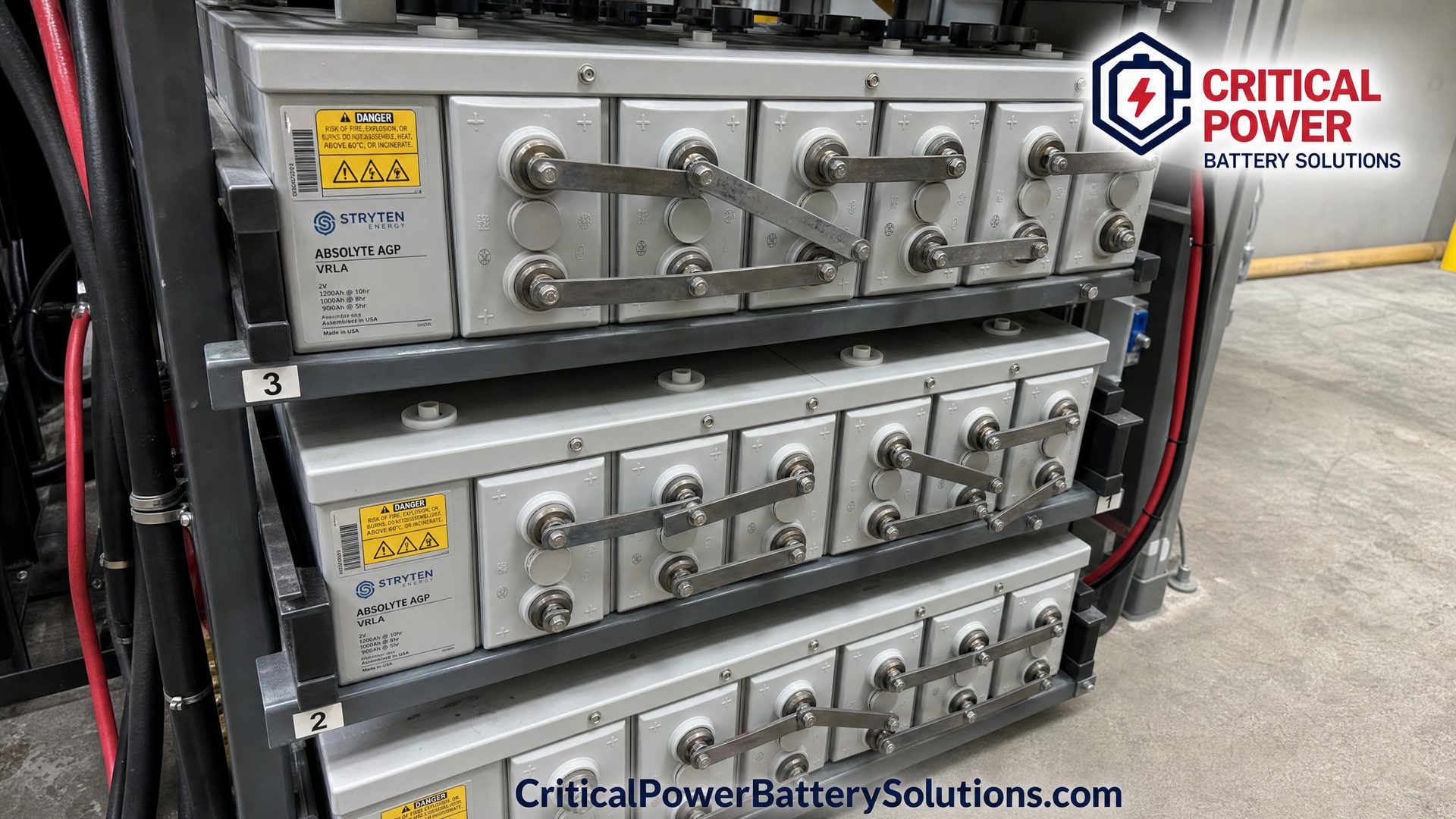
The GNB to Stryten transition is a corporate rebrand, not a redesign. Stryten Energy acquired the industrial battery portfolio from Exide Technologies in 2020 and continued manufacturing the Absolyte line to the same drawings, the same chemistry, and the same factory tooling. For an AHJ, this matters because design continuity is the basis for accepting a replacement without re-engineering.
The compliance question is not “is it the same cell” – the engineering data answers that. The compliance question is “where is the documentation that proves it.” That is the gap this post fills.
For deeper technical equivalence between Stryten Absolyte AGP and the legacy GNB Industrial Power Absolyte product, see our dedicated upgrade guide. The remainder of this post stays in the documentation lane.
Manufacturer’s Declaration of Design Continuity for GNB Absolyte Replacements
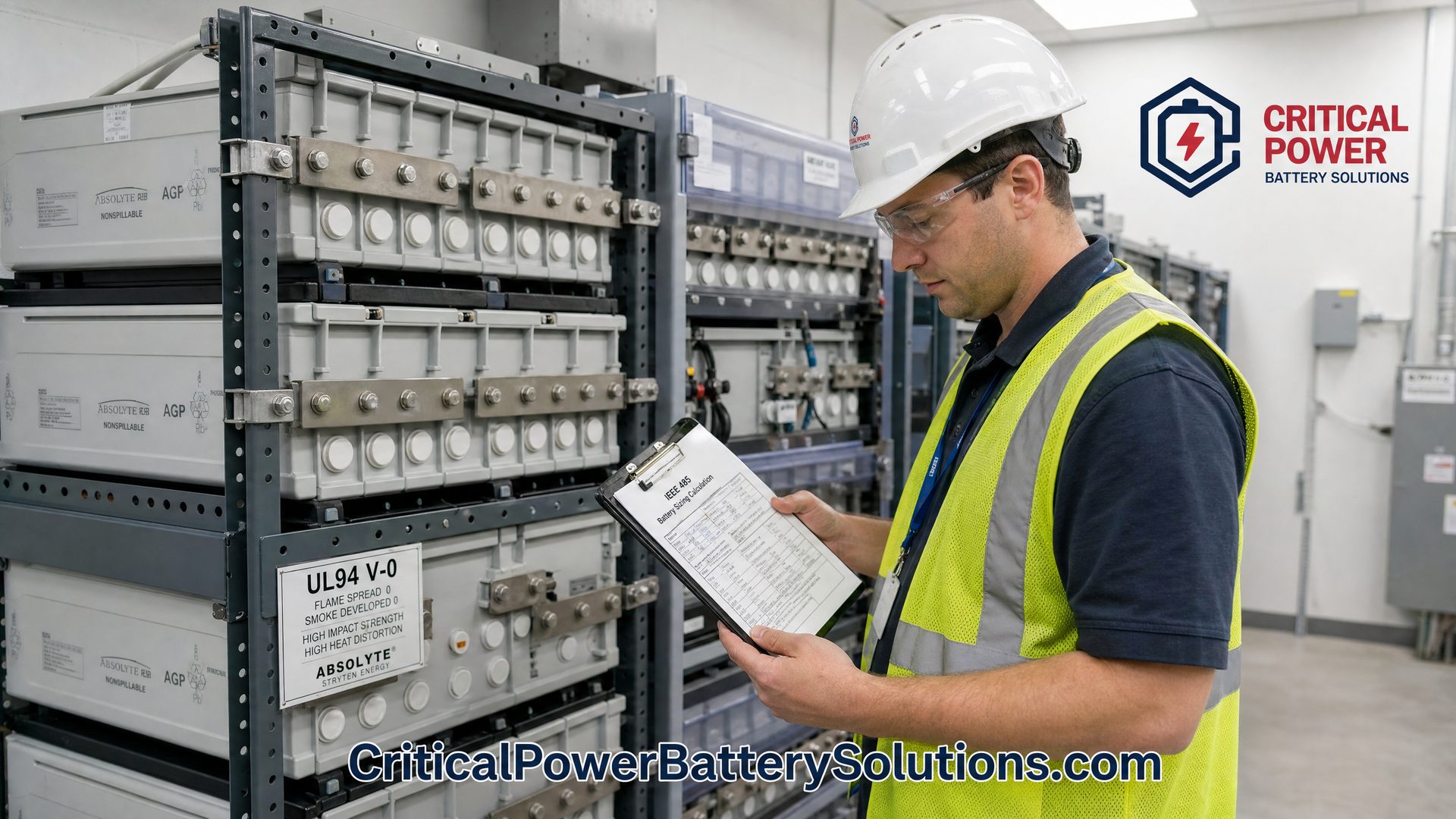
A Manufacturer’s Declaration of Design Continuity is a signed letter from Stryten Energy that confirms a new Absolyte AGP cell is electrically, mechanically, and chemically identical to the legacy GNB Absolyte cell it replaces. It is the single most useful document in an AHJ audit packet because it lets the inspector accept the replacement under the original system’s approval rather than re-engineering the battery room.
The declaration typically references the original GNB part number, the equivalent Stryten part number, the shared cell drawing, and the chemistry specifications carried over from the GNB era. It is provided through authorized Stryten distribution and is not available through gray-market channels.
Three audit triggers usually require this letter on file: a fire marshal inspection that flags a manufacturer change, a utility commission audit on a substation battery, and any insurance-driven facility recertification. Filing the declaration before the inspection is faster than producing it under pressure during one.
UL94 V-0 Container Verification for GNB Absolyte Systems
UL94 V-0 is the flame-retardancy rating most US fire marshals look for on stationary VRLA battery containers. It is a standard requirement under NEC Article 500 environments and is increasingly specified for telecom central offices, data centers, and utility control buildings even where Article 500 does not strictly apply.
Stryten Absolyte AGP cells use a flame-retardant polycarbonate container that meets UL94 V-0. The verification document is a polymer specification letter from Stryten that names the resin, the UL file number, and the test results. Authorized resellers can pull this letter directly from the OEM technical library.
This document is what closes a fire marshal inspection without a redesign. Without it, an inspector can require either a different chemistry, a different containment system, or a deeper plan review. With it, the inspector typically signs off the same day.
UBC to IBC Seismic Code Transition for GNB Absolyte Battery Racks
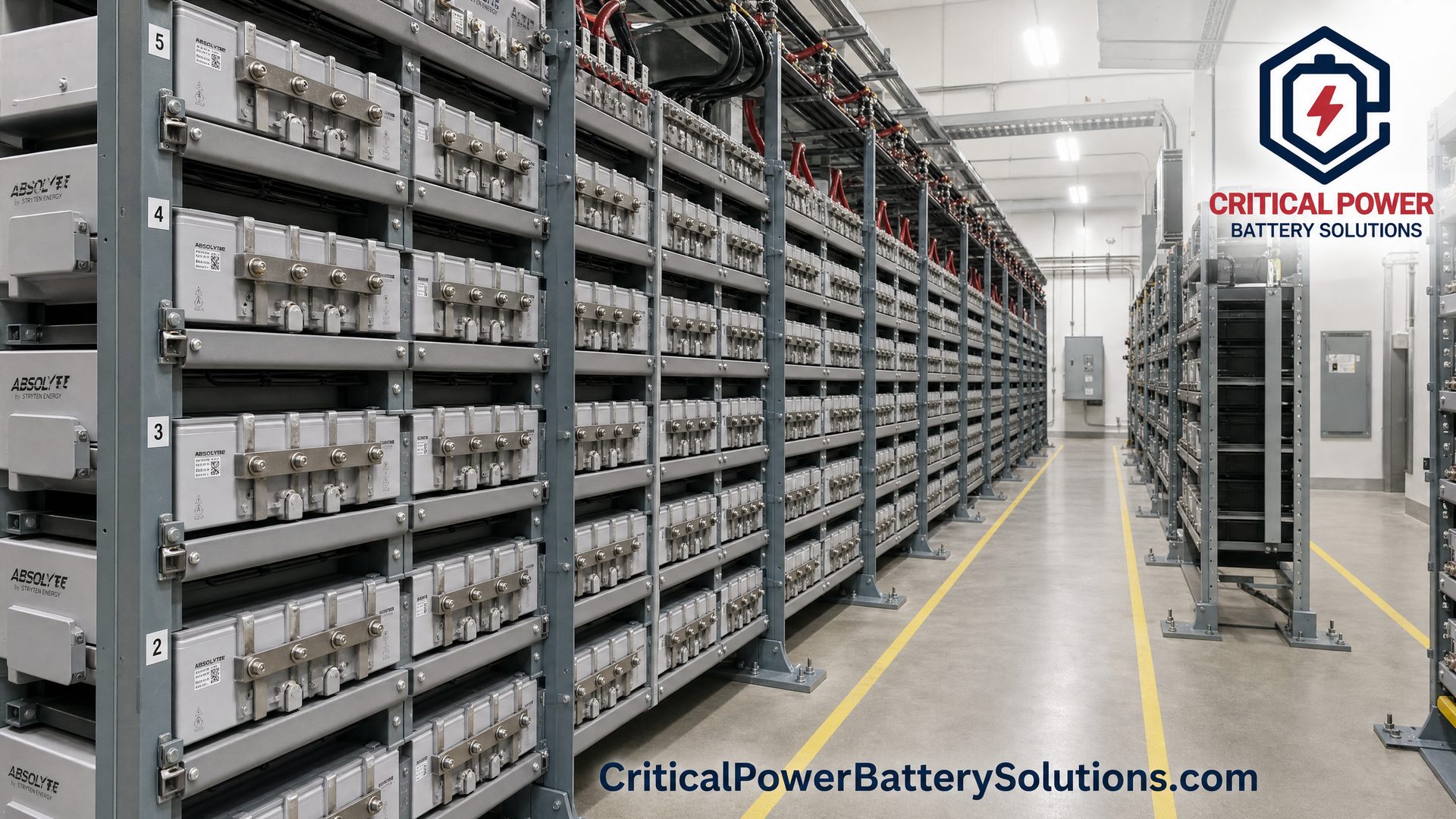
Most legacy GNB Absolyte battery racks were anchored under the Uniform Building Code (UBC), which the International Building Code (IBC) replaced in 2000. A Stryten Absolyte AGP replacement triggers a code review in many jurisdictions because the install is treated as a new project under current code rather than a like-for-like swap.
The practical impact depends on the seismic design category of the facility. In high-seismic regions – California, the Pacific Northwest, parts of the Mountain West, and the New Madrid zone in the Midwest – the IBC review almost always requires updated anchoring calculations. In low-seismic regions, the legacy anchoring may be accepted with engineering review.
Stryten provides IEEE 693 Zone 4 qualified racks for the AGP product line. The compliance deliverable an AHJ wants to see is a sealed engineering calculation showing that the rack, anchors, and floor connection meet IBC seismic provisions for the facility’s specific design category.
The Department of Energy and the U.S. Energy Information Administration both publish technical data underscoring the scale of stationary battery infrastructure subject to seismic review. Cumulative utility-scale battery storage in the United States exceeded 26 gigawatts in 2024, illustrating the volume of installations that fall under IBC seismic compliance.[1][2]
AHJ Audit Workflow: GNB Absolyte to Stryten AGP Documentation
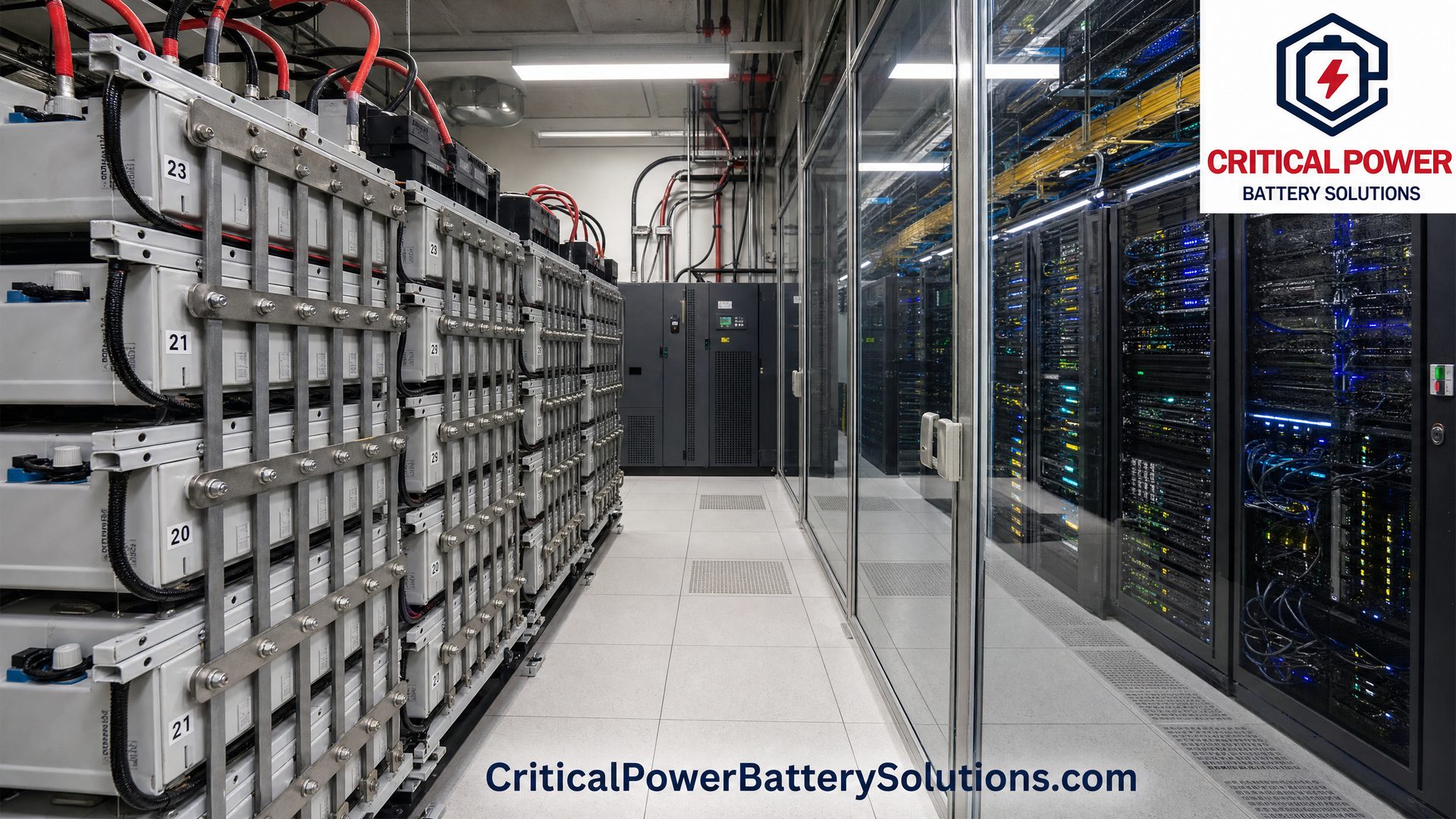
The audit workflow is sequential. AHJs typically request the design continuity letter first, then the UL94 V-0 polymer letter, then the seismic calculation. If any one is missing, the inspection pauses.
Where the documentation lives matters as much as having it. Most facilities benefit from a single compliance binder, kept onsite or in the facility EMS, that contains the three core documents plus the IEEE 485 sizing report, the IEEE 1188 commissioning record, and the OSHA-compliant disposal manifest from the legacy system. Telecom batteries in central offices and data center battery rooms are the most frequent audit targets, but utility substations and switchgear rooms see the same pattern.
End-of-life disposal documentation matters because the OSHA and EPA paper trail closes the legacy GNB system officially before the new Stryten system is brought online. The U.S. Environmental Protection Agency advises that high-capacity batteries be processed through specialized recycling facilities to prevent thermal events and material loss.[3][5] OSHA additionally requires that workers handling battery recycling be trained on hazards and properly equipped.[4]
GNB Absolyte Compliance Documentation Checklist
Use this checklist to assemble an audit-ready documentation packet before scheduling an AHJ inspection. Each item maps to a specific compliance question an inspector typically asks.
- Manufacturer’s Declaration of Design Continuity – Signed letter from Stryten Energy confirming the new Absolyte AGP cell is electrically, mechanically, and chemically identical to the legacy GNB Absolyte cell.
- UL94 V-0 polymer verification letter – Stryten OEM document naming the container resin, UL file number, and flame-retardancy test results.
- IEEE 485-2020 sizing report – Sealed engineering calculation showing battery sizing meets the current load profile and runtime requirements.
- IBC seismic anchoring calculation – Sealed engineering calculation showing the rack and floor anchorage meet the facility’s seismic design category.
- IEEE 693 rack certification – Manufacturer documentation for the rack’s seismic qualification level (Zone 2, 3, or 4 as applicable).
- NEC Article 500 review (if applicable) – Confirmation that the install meets hazardous-location classification for the room.
- IEEE 1188 commissioning record – Baseline cell voltages, internal resistance values, and connection torque records taken at commissioning.
- OSHA-compliant disposal manifest – Recycler certificate of acceptance for the legacy GNB Absolyte cells, closing the prior system in the compliance record.
- Authorized distributor invoice – Verification that the new Stryten cells were sourced through the OEM channel, preserving warranty and OEM technical support.
- Site-specific operations and maintenance plan – Written procedure referencing IEEE 1188 for ongoing testing and IEEE 1187 for installation and design.
Our engineering team can prepare or assemble each of these as part of an engineered industrial battery replacement, including the IEEE 1188 compliant load testing records that anchor the commissioning file.
Partnering with a US-based authorized reseller provides a distinct advantage in this area. It helps ensure the delivery of authentic stock, facilitates proper EPA-compliant recycling of old units, and streamlines the management of heavy freight logistics without the unpredictable delays associated with international shipping. Adhering to these OSHA and EPA standards not only maintains facility compliance but also supports a safer operational environment.
Bonus Step: Verify Against the Primary-Source Documents
For an additional layer of authentication when specifying Stryten E-Series batteries, reference the three signed Stryten Manufacturing letters published on this site. They establish reseller authorization scope, brand continuity from the GNB era, and the official E-Series naming convention:
- Stryten Manufacturing Reseller Authorization Letter (PDF), scope of authorized E-Series product line including Absolyte, Flooded Classic, AGM batteries, and chargers.
- Stryten Energy Manufacturer’s Declaration (August 17, 2023, PDF), GNB-to-Stryten product continuity certifying that MCX, NXT, H1T, and MCT designs remain unchanged from the GNB era.
- Stryten Energy Essential Power Branding Change Letter (March 6, 2023, PDF), the official E-Series naming announcement that replaced legacy GNB designations.
When in doubt, contact Stryten Energy customer service through their official channels at stryten.com to confirm authorization status of any supplier.
GNB Absolyte Compliance – Frequently Asked Questions
What is a Manufacturer’s Declaration of Design Continuity?
A Manufacturer’s Declaration of Design Continuity is a signed OEM letter confirming that a replacement battery is electrically, mechanically, and chemically identical to the legacy product it succeeds. For GNB Absolyte to Stryten AGP, Stryten issues this letter referencing the original GNB part number, the equivalent Stryten part number, and the shared cell drawing – allowing an AHJ to accept the replacement under the original approval rather than re-engineering the battery room.
How do I verify UL94 V-0 polymer specifications for a fire marshal inspection?
Request a UL94 V-0 verification letter from Stryten Energy through your authorized distributor; the letter names the container resin, the UL file number, and the flame-retardancy test results. This single document closes most fire marshal inspections under NEC Article 500. Without it, inspectors typically require a deeper plan review or alternate containment.
Is my UBC-era battery rack compliant with current IBC seismic code?
A UBC-era rack is not automatically IBC-compliant; most jurisdictions treat a battery replacement as a trigger for current-code seismic review. In high-seismic design categories – California, the Pacific Northwest, the Mountain West, and the New Madrid zone – updated IBC anchoring calculations are typically required. In low-seismic regions, legacy anchoring may be accepted with engineering review.
What does an AHJ typically require to approve a GNB Absolyte to Stryten replacement?
Most AHJs accept three documents: a Manufacturer’s Declaration of Design Continuity, a UL94 V-0 polymer verification letter, and an IBC-compliant seismic anchoring calculation sealed by a licensed engineer. Some AHJs additionally request the IEEE 485 sizing report and the IEEE 1188 commissioning record. Assemble all five before scheduling the inspection.
Can a design-continuity declaration substitute for re-engineering a battery system?
In most US jurisdictions, yes – a properly executed design-continuity declaration allows an AHJ to accept the replacement under the original system’s approval without a full re-engineering pass. The exception is where the replacement also changes capacity, runtime, or location, in which case a fresh IEEE 485 sizing study is typically required regardless.
How do I document UL94 V-0 compliance for an audit?
Keep the Stryten polymer verification letter in the facility compliance binder, reference its UL file number in the IEEE 1188 commissioning record, and attach a copy to the AHJ submittal package. The letter should be dated within 12 months of the replacement and should specifically name the Absolyte AGP product, not just the manufacturer.
What documentation should I keep on file after a GNB Absolyte to Stryten replacement?
Maintain a single compliance binder containing the design-continuity letter, UL94 V-0 polymer letter, IEEE 485 sizing report, IBC seismic calculation, IEEE 1188 commissioning record, OSHA disposal manifest, and authorized distributor invoice. Retain for the full design life of the system – typically 20 years for Absolyte AGP – plus any additional retention period required by the facility’s regulatory framework.
Which seismic anchoring code applies to my facility (UBC vs IBC)?
The IBC applies to virtually all US facilities for new and replacement work; UBC has not been published as a current code since 1997 and IBC adoption was complete in most jurisdictions by the early 2000s. Confirm with the local building department which IBC edition the AHJ is currently enforcing, since adopted edition years vary by jurisdiction.
Limitations, Alternatives & Professional Guidance
Compliance documentation is jurisdiction-specific. AHJs interpret IBC seismic provisions, NEC Article 500 application, and design-continuity acceptance differently across regions. The framework in this post reflects what most US AHJs request, but always verify against the specific reviewer assigned to your project.
Where the legacy GNB system has been modified, expanded, or partially replaced over its life, the design-continuity path may not apply cleanly. In those cases, a fresh IEEE 485 sizing study and a full plan submittal are usually faster than trying to retrofit the documentation.
Lithium-ion is sometimes proposed as an alternative to a like-for-like Absolyte replacement. The compliance picture is different – a lithium installation triggers UL 9540 / UL 9540A review, often a fire suppression upgrade, and a fresh seismic study. Sticking with VRLA continuity avoids those costs but only when the documentation lane is available.
Battery sizing, seismic calculations, and AHJ submittals should not be handled internally without certified engineering support. Plan the documentation packet early, file before the inspection, and keep the compliance binder current. Preparing to discuss specific load profiles and local fire codes during a professional consultation can streamline the compliance process.
Conclusion
A GNB Absolyte to Stryten AGP replacement does not have to trigger a battery-room redesign. The Manufacturer’s Declaration of Design Continuity, UL94 V-0 polymer verification, and IBC seismic anchoring calculation – filed together – typically clear an AHJ inspection in a single pass. The work is in assembling the documentation, not in changing the engineering.
Critical Power Battery Solutions, backed by 40+ years of ATS engineering expertise, is an authorized Stryten Energy distributor. We assemble the design-continuity letter, the UL94 V-0 verification, the IEEE 485 sizing report, and the IBC seismic calculation as part of an engineered Absolyte AGP replacement. Consider requesting a Free Battery Sizing Consultation to scope the documentation packet for your facility before the next inspection cycle.
References
- U.S. Energy Information Administration (EIA) – Battery Storage Capacity
- Department of Energy (DOE) – Energy Storage Reports and Data
- U.S. Environmental Protection Agency (EPA) – Battery Collection Best Practices
- Occupational Safety and Health Administration (OSHA) – Battery Recycling
- U.S. Environmental Protection Agency (EPA) – Used Battery Disposal
👤 Article by: Tom Kierna
Reviewed by: CPBS Engineering Team
Last updated: May 07, 2026
Credentials: Authorized Stryten battery Reseller, ISO 9001 Certified, IEEE Standards Member