

The E-Series Hierarchy
The Stryten E-Series hierarchy categorizes stryten energy batteries into distinct models engineered for specific discharge profiles and industrial applications. Standardizing on the correct model is critical for facility longevity and operational resilience. It is important to clarify that these are specialized stationary industrial power units designed for utility-scale deployment, not standard automotive applications. As the industry scales, highlighted by a 2024 report from the U.S. Energy Information Administration observing that cumulative utility-scale battery storage capacity exceeded 26 gigawatts (GW) across the United States[2]: selecting the appropriate stryten battery architecture becomes paramount.
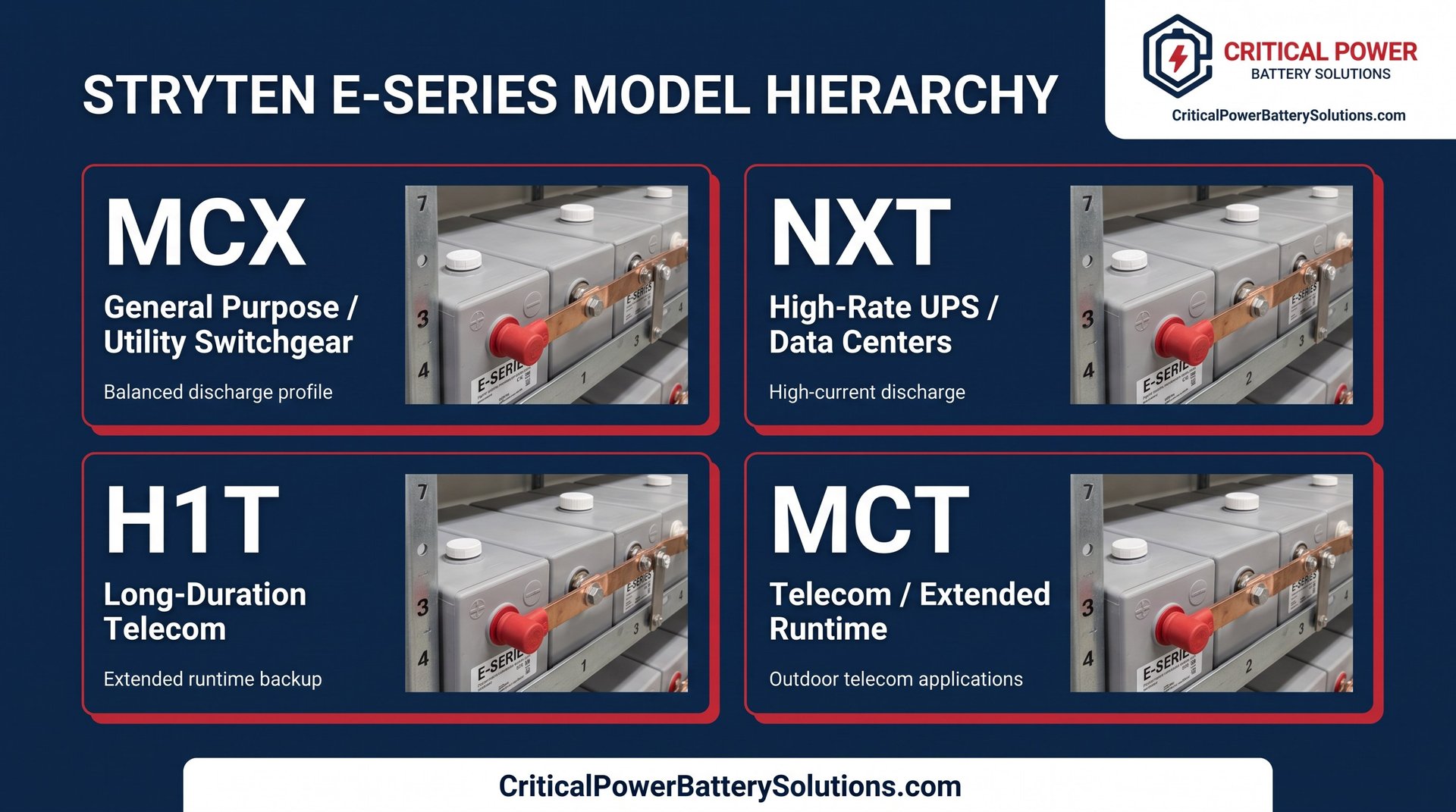
MCX (General Purpose): This model is well-suited for broad utility and switchgear applications supporting mission-critical infrastructure. It offers a balanced discharge profile designed to maintain stability across varied operational demands.
NXT (High-Rate UPS): Engineered specifically for data centers requiring immediate, high-current discharge. The NXT line is optimized to bridge generator startup times, providing intense bursts of power without compromising the integrity of the cell structure.
H1T / MCT (Long-Duration Telecom): Designed to support prolonged, steady discharge profiles typical in telecommunications environments. These models excel in situations where a consistent power draw is required over an extended outage.
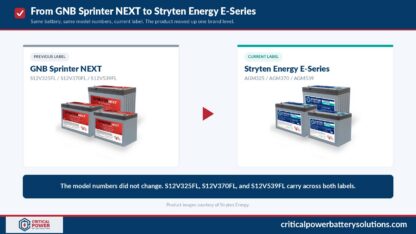
Legacy Upgrades: For facilities managing aging infrastructure, we map exact replacement pathways to modern equivalents. Whether transitioning from a legacy GNB PDQ to a Stryten PDQ, evaluating a GNB Absolyte GP replacement, or addressing an Exide battery replacement by moving from an Exide MCT to a Stryten MCT, understanding these stryten battery brands ensures seamless integration and minimizes downtime during infrastructure upgrades.
Selecting the correct model from the E-Series lineup is the foundational step in protecting your facility. However, choosing the right hardware is only part of the equation. To deploy these models effectively and ensure they meet specific runtime requirements, facility managers must apply rigorous mathematical sizing frameworks.
Technical Sizing & IEEE 485
While generic online tools and standard AI models often provide basic “calculate your load” advice, these consumer-level estimates frequently fail to account for the complex discharge curves of industrial systems. What is missing from standard battery sizing software is strict adherence to IEEE 485 standards, specific gravity impacts, and capacity overlap resolution. Incorrect sizing can lead to catastrophic facility downtime or thousands of dollars in wasted infrastructure spend. Understanding common IEEE 485 sizing mistakes is a critical first step before commissioning any new battery system.
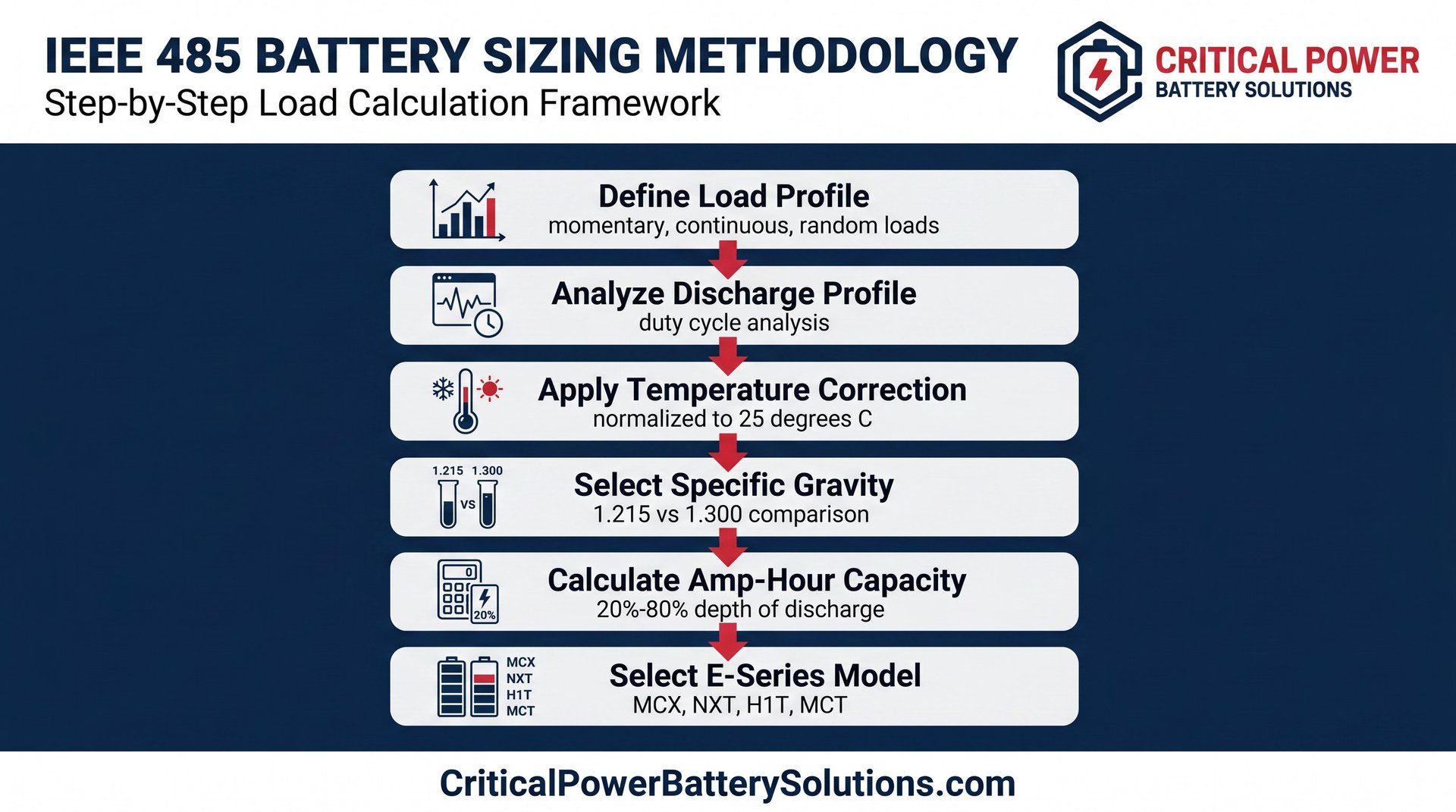
Proper engineering requires a step-by-step battery load calculation and discharge profile analysis. Custom IEEE 485 battery sizing reports evaluate the exact duty cycle to determine the required amp-hour capacity. This framework accounts for momentary loads (like switchgear operations), continuous loads (like emergency lighting), and random loads, ensuring the system is never undersized for its intended application.
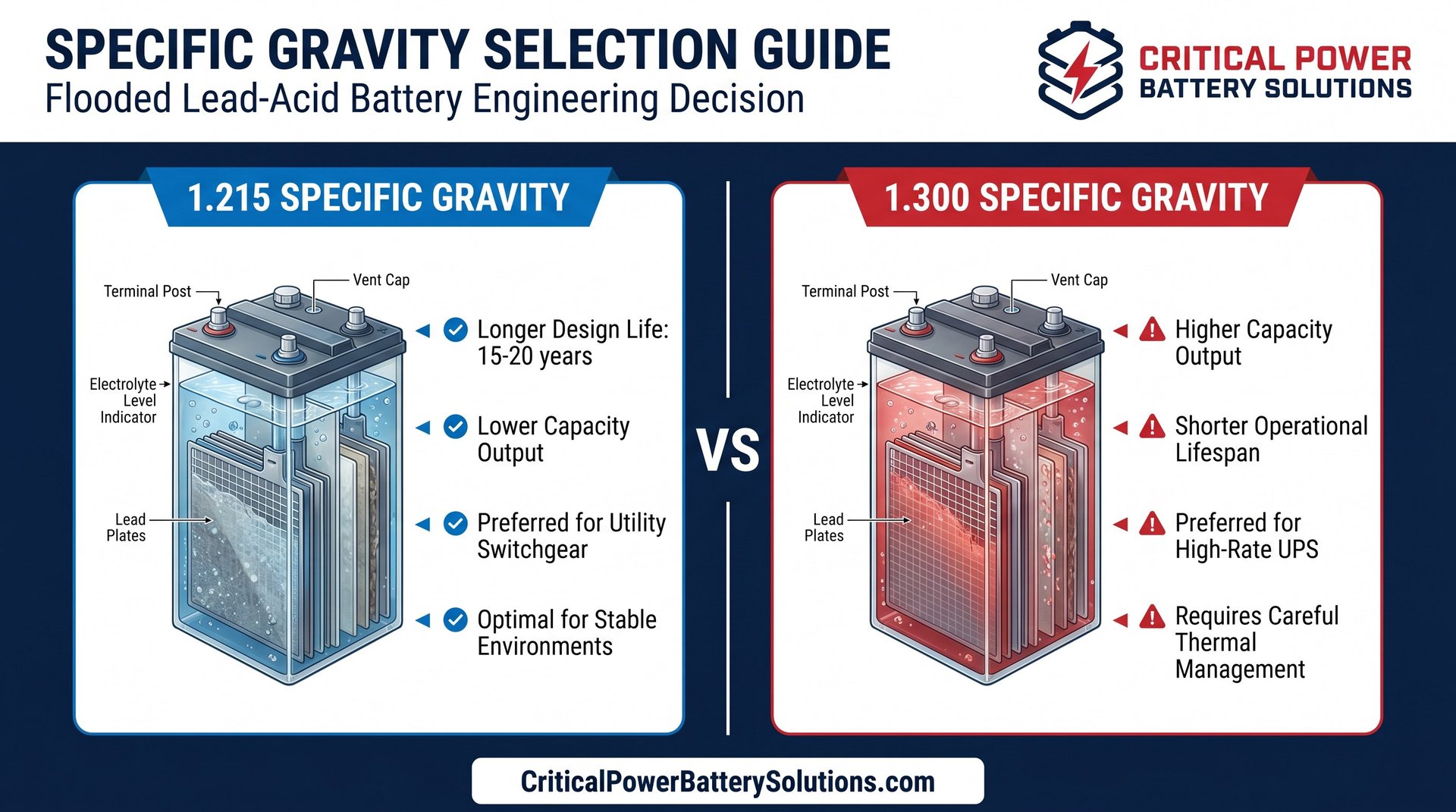
A critical engineering decision involves selecting the correct specific gravity for flooded lead-acid batteries. An electrolyte specific gravity of 1.215 typically supports a longer design life but offers lower capacity, whereas a 1.300 specific gravity provides higher capacity but may result in a shorter operational lifespan. Choosing between these parameters requires a deep understanding of the facility’s thermal environment and maintenance capabilities.
Furthermore, advanced sizing often incorporates Tom Kierna’s methodology, a recognized approach for navigating complex capacity overlaps in multi-period duty cycles, ensuring no segment of the discharge profile is undersized. To maintain the sized system, facilities must integrate a routine battery load test and a battery specific gravity test under strict IEEE 450 standards. Understanding how to check specific gravity of battery cells and executing a proper battery load testing procedure are essential components of flooded battery maintenance and flooded lead acid battery charging.
The necessity of these frameworks is backed by global engineering standards. According to the IEEE 485 standard, stationary battery sizing must account for load profiles, a 20% to 80% depth of discharge, and precise temperature correction factors normalized to 25°C.[1] The ATS Engineering Board consistently emphasizes that custom engineering reports offer significantly more reliability than generic calculators for UPS battery sizing.
United States Logistics & Compliance
Deploying heavy flooded lead-acid batteries across the United States requires strict adherence to domestic logistics and regional safety codes. Due to the physical weight and hazardous materials classification of VLA units, facilities must navigate complex regulatory landscapes when installing industrial battery backup systems.
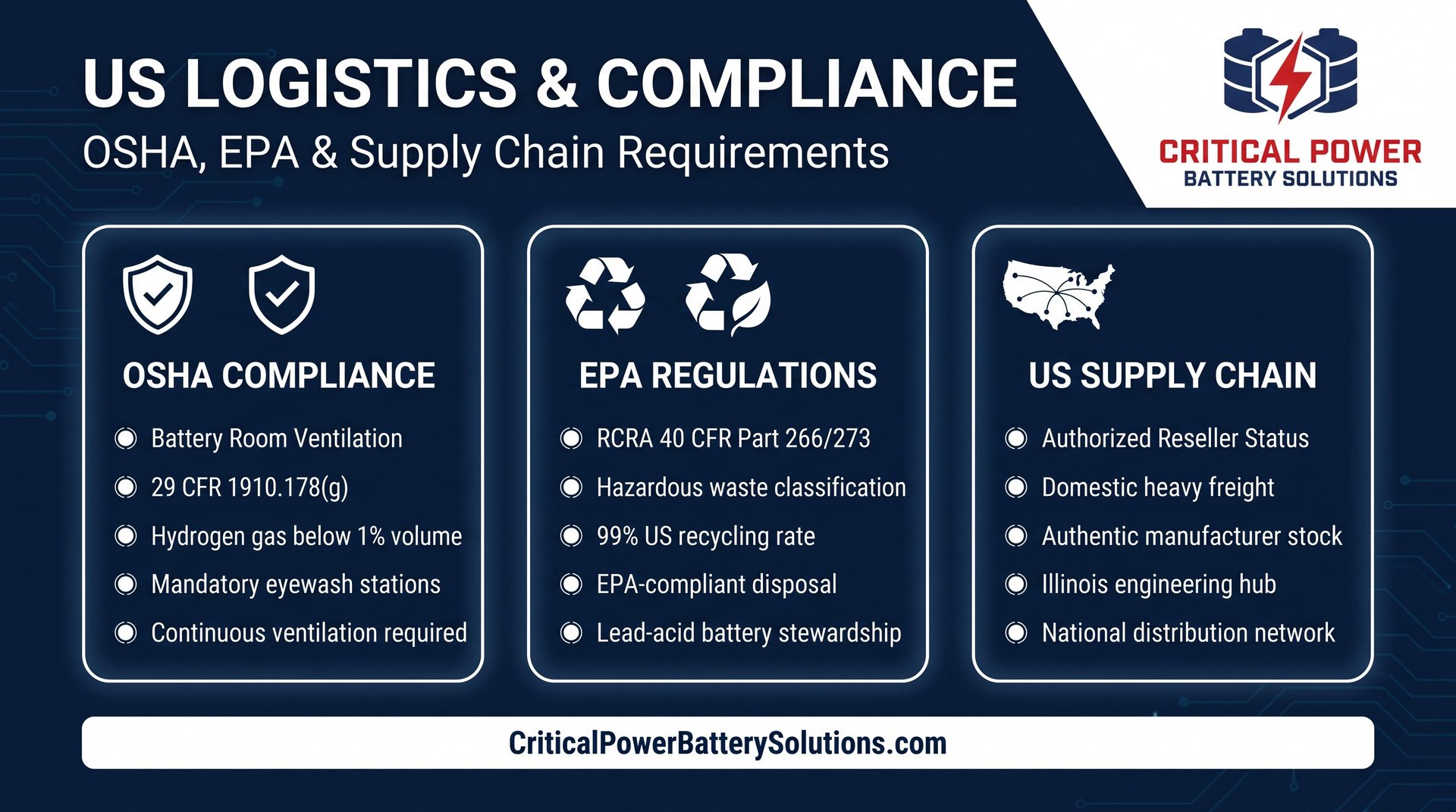
Proper battery room ventilation calculation is a regulatory necessity. According to OSHA regulations 29 CFR 1910.178(g) and 1926.441, facilities housing flooded lead-acid batteries must provide adequate continuous ventilation to prevent explosive hydrogen gas mixtures from exceeding a 1% volume accumulation, alongside mandatory eyewash stations.[4] Failure to meet these ventilation standards can result in severe safety hazards and compliance penalties.
Managing the lifecycle and recycling of legacy units is equally critical. Under the Resource Conservation and Recovery Act (RCRA) 40 CFR Part 266 and 273, spent lead-acid batteries are classified as hazardous waste; however, specialized management standards have resulted in an estimated 99% recycling rate within the United States.[5]
Partnering with a US-based authorized reseller provides a distinct advantage in this area. It helps ensure the delivery of authentic stock, facilitates proper EPA-compliant recycling of old units, and streamlines the management of heavy freight logistics without the unpredictable delays associated with international shipping. Adhering to these OSHA and EPA standards not only maintains facility compliance but also supports a safer operational environment.
Bonus Step: Verify Against the Primary-Source Documents
For an additional layer of authentication when specifying Stryten E-Series batteries, reference the three signed Stryten Manufacturing letters published on this site. They establish reseller authorization scope, brand continuity from the GNB era, and the official E-Series naming convention:
- Stryten Manufacturing Reseller Authorization Letter (PDF), scope of authorized E-Series product line including Absolyte, Flooded Classic, AGM batteries, and chargers.
- Stryten Energy Manufacturer’s Declaration (August 17, 2023, PDF), GNB-to-Stryten product continuity certifying that MCX, NXT, H1T, and MCT designs remain unchanged from the GNB era.
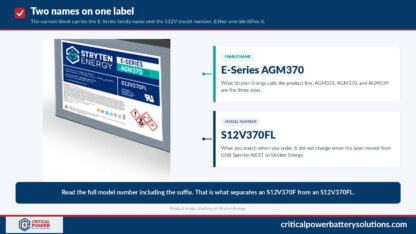
- Stryten Energy Essential Power Branding Change Letter (March 6, 2023, PDF), the official E-Series naming announcement that replaced legacy GNB designations.
When in doubt, contact Stryten Energy customer service through their official channels at stryten.com to confirm authorization status of any supplier.
For specific operational queries regarding deployment and maintenance, the following section addresses the most common questions from facility managers.
Frequently Asked Questions
What does it mean if my battery is flooded?
A flooded battery means the lead plates are fully submerged in a liquid electrolyte solution of sulfuric acid and water. This vented lead-acid (VLA) design allows gases to escape during charging. They require regular maintenance, including watering and specific gravity checks, but offer exceptional lifespan and reliability for industrial applications.
What is the life expectancy of a flooded battery?
The life expectancy of an industrial flooded battery typically ranges from 15 to 20 years when properly maintained. Lifespan depends heavily on operating temperature, depth of discharge, and adherence to maintenance schedules like specific gravity testing. Results may vary based on environmental conditions and charging protocols.
How can I tell if my battery is AGM or flooded?
You can tell a battery is flooded if it has removable vent caps on top for adding distilled water. AGM (Absorbent Glass Mat) batteries are completely sealed and maintenance-free, with no access to the internal electrolyte. Flooded batteries will also slosh when moved, whereas AGM batteries contain no free liquid.
What’s better, AGM or flooded?
Neither is universally better; the choice depends entirely on your specific application and maintenance capabilities. Flooded batteries offer a longer 20-year lifespan and handle deep cycling well but require dedicated ventilation and watering. AGM batteries are maintenance-free and spill-proof but typically have a shorter 10-year design life.
How do you fix a flooded battery?
You cannot “fix” a degraded flooded battery, but you can restore performance through proper maintenance like equalization charging and watering. If a battery fails a load test or has permanently sulfated plates, it must be replaced and recycled. Always consult a professional before attempting to service industrial power systems.
Who are Stryten Energy competitors?
Stryten Energy’s primary competitors in the industrial stationary power market include Leoch, EnerSys, C&D Technologies, and East Penn Manufacturing. Facility managers often compare these brands when designing telecom battery systems or selecting a battery replacement for UPS applications. Stryten distinguishes itself through its robust E-Series and Absolyte lines.
What batteries does Stryten make?
Stryten Energy manufactures a wide range of industrial batteries, including the flooded E-Series (MCX, NXT, H1T, MCT) and the VRLA Absolyte line. When discussing stryten energy batteries, they engineer solutions specifically for motive power, essential power (telecom, utilities, data centers), and advanced military applications. They do not focus on standard consumer electronics.
What industrial battery brands are available for critical power systems?
The leading industrial battery brands available for critical power systems include Stryten Energy, Leoch, EnerSys, and C&D Technologies. As an authorized reseller, Critical Power Battery Solutions provides premium Stryten and Leoch products, ensuring facilities receive authentic units backed by full manufacturer warranties and rigorous IEEE 485 sizing support.
How do I size a battery backup system for a data center?
To size a battery backup system for a data center, you must perform an IEEE 485 load calculation that analyzes your specific discharge profile, load duration, and temperature. This process determines the exact amp-hour capacity required. Relying on generic battery sizing software is risky; always secure a custom engineering report.
What is the expected lifespan of Stryten Absolyte batteries?
The expected lifespan of Stryten Absolyte batteries is typically 20 years under optimal operating conditions. As premium VRLA (Valve-Regulated Lead-Acid) systems, they are designed for long-term reliability in telecommunications and switchgear applications. Maintaining an ambient temperature of 25°C (77°F) is critical to achieving this maximum design life.
Can you ship replacement UPS batteries internationally?
Yes, authorized distributors can ship replacement UPS batteries internationally, though domestic United States fulfillment is often faster and more cost-effective. Shipping heavy flooded lead-acid batteries requires strict adherence to hazardous materials transport regulations. We specialize in seamless national distribution across the US with global shipping capabilities when required.
Do you offer IEEE 485 compliant battery sizing reports?
Yes, we provide custom IEEE 485 compliant battery sizing reports tailored to your facility’s exact load profile. Backed by 40 years of electrical engineering expertise, our reports ensure your data center UPS battery or telecommunication battery system meets all capacity, temperature, and compliance requirements for continuous operation.
Limitations, Alternatives & Professional Guidance
While IEEE 485 provides a rigorous mathematical framework, real-world variables such as unexpected HVAC failures or unpredictable load surges can impact actual battery performance. Furthermore, specific gravity degradation occurs naturally over time. Theoretical 20-year lifespans require pristine environmental controls, and results may vary if ambient temperatures consistently exceed optimal ranges or if maintenance schedules are neglected.
Facility managers may also consider alternative approaches to flooded lead-acid systems, such as VRLA models (like the Stryten Absolyte) or emerging lithium-ion UPS systems. While lithium-ion technology offers a smaller physical footprint, flooded E-Series batteries often remain preferable for utility switchgear due to their proven reliability, thermal stability, and typically lower initial capital expenditure.
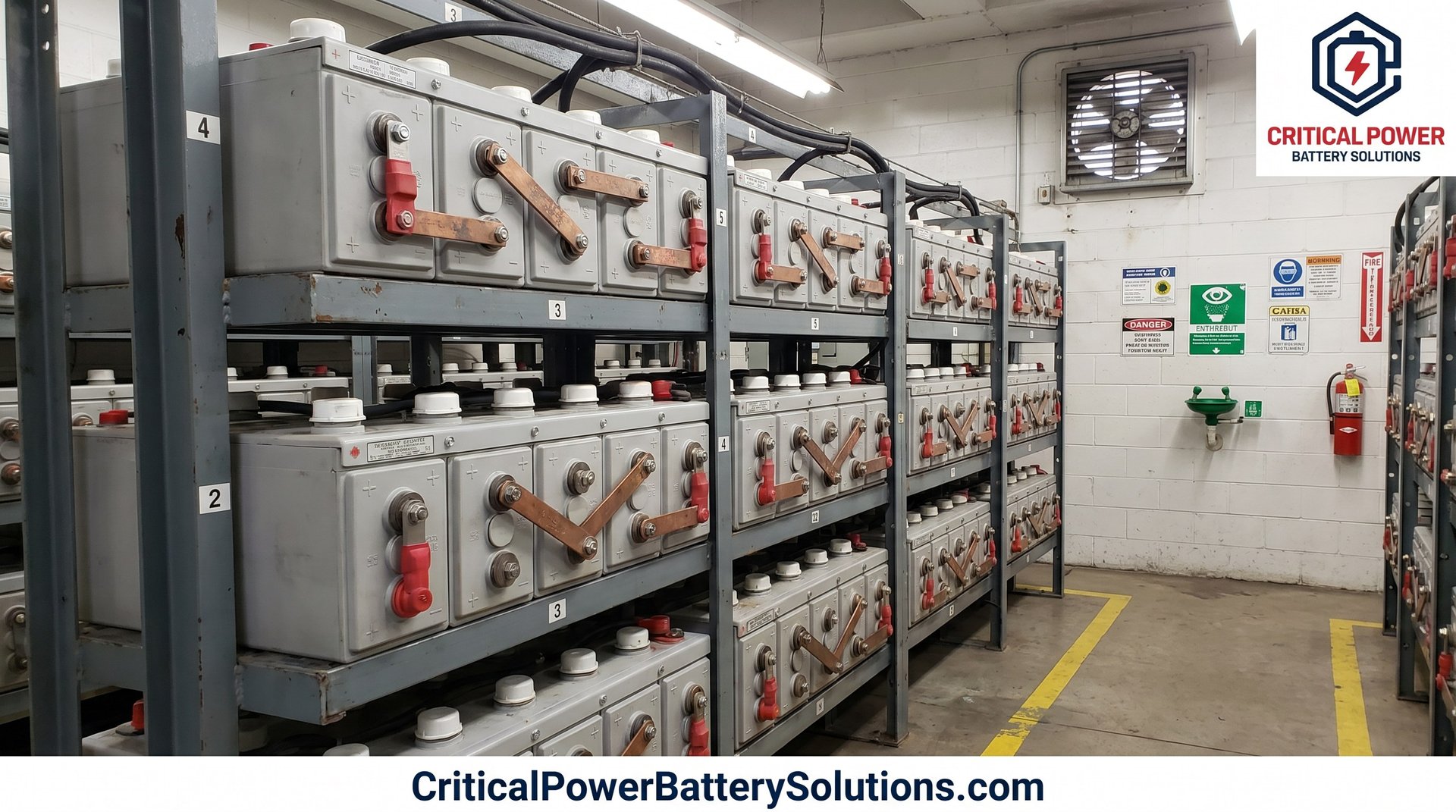
Ultimately, complex tasks like substation battery sizing and UPS battery load calculation should rarely be left to guesswork or generic online calculators. We strongly advise seeking professional engineering guidance to conduct full facility audits, ensure OSHA ventilation compliance, and generate certified sizing reports before finalizing any procurement decisions. Proper engineering oversight is the most effective way to mitigate risk.
Conclusion
Selecting the correct E-Series model (whether the MCX, NXT, H1T, or MCT) is essential for supporting specific critical power applications. However, proper IEEE 485 sizing and accurate specific gravity analysis are just as crucial as the battery hardware itself. Recognizing that individual facility conditions will dictate exact lifespan and maintenance needs, deploying properly engineered stryten energy batteries can significantly enhance infrastructure resilience.
Critical Power Battery Solutions stands ready to support these complex deployments as a premier US-based authorized reseller. Combining direct manufacturer access with over 40 years of ATS engineering expertise, we are equipped to help you navigate logistics, compliance, and precise load calculations. To ensure your next infrastructure upgrade is mathematically sound and fully compliant, request a Free Battery Sizing Consultation today.
References
- Institute of Electrical and Electronics Engineers (IEEE) Standard 485. According to the IEEE 485 standard, stationary battery sizing must account for load profiles, a 20% to 80% depth of discharge, and precise temperature correction factors normalized to 25°C.
- U.S. Energy Information Administration (EIA) 2024 Report. In 2024, the U.S. Energy Information Administration observed that cumulative utility-scale battery storage capacity exceeded 26 gigawatts (GW) across the United States.
- U.S. Energy Information Administration (EIA) 2024 Analysis. During 2024, power providers added 10.3 GW of new battery storage capacity to support grid reliability and infrastructure growth.
- Occupational Safety and Health Administration (OSHA) 29 CFR 1910.178(g) & 1926.441. OSHA regulations 29 CFR 1910.178(g) and 1926.441 mandate that facilities housing flooded lead-acid batteries provide adequate continuous ventilation to prevent explosive hydrogen gas mixtures from exceeding a 1% volume accumulation, alongside mandatory eyewash stations.
- U.S. Environmental Protection Agency (EPA) RCRA 40 CFR Part 266/273. Under the Resource Conservation and Recovery Act (RCRA) 40 CFR Part 266 and 273, spent lead-acid batteries are classified as hazardous waste; however, specialized management standards have resulted in an estimated 99% recycling rate within the United States.