UPS Battery Replacement Cost in 2026: How to Budget, Compare Quotes, and Justify Premium Batteries
If you are budgeting for UPS battery replacement in 2026, you are dealing with a decision that will impact your facility for the next decade or more. VRLA UPS batteries are typically considered end-of-life around 3–5 years, while lithium-ion UPS batteries can reach 8–10 years, so the wrong choice can double your replacement frequency and inflate your long-term spend. In our experience supporting data centers, telecom networks, and utility sites, the real question is not “What does a battery cost?” but “What does each year of reliable runtime cost the business?”
Key Takeaways
| Question | Key Answer |
|---|---|
| What drives UPS battery replacement cost the most? | battery replacement cost factors include chemistry (VRLA vs pure lead vs Li-ion), design life, operating temperature, maintenance practices (IEEE 450 / IEEE 1188), labor, disposal, and downtime risk. Reviewing complete UPS battery product options helps frame these variables. |
| How should we budget UPS battery lifecycle cost? | We recommend calculating ups battery lifecycle cost as cost per year of service over a 10–20 year horizon, including replacements, maintenance, and battery downtime cost. For sector-specific guidance, see our data center UPS battery replacement systems overview. |
| What is the UPS battery total cost of ownership (TCO)? | ups battery tco often shows that batteries represent 35–50% of long-term UPS costs. Factoring in installation, disposal, testing, and warranty is essential to accurate ups battery total cost ownership analysis. Telecom operators can also review our telecom battery backup systems guidance. |
| Are premium batteries worth the higher price? | Premium VRLA and pure lead solutions may carry a 15–25% higher upfront ups system battery cost, but can reduce replacement frequency by 30–50%, leading to lower battery cost per year. Our discussion of Stryten Energy’s E-Series Absolyte AGP applies this logic; see the product overview at Stryten E-Series Absolyte AGP. |
| How do we compare industrial UPS battery pricing across vendors? | For meaningful industrial ups battery pricing comparisons, align quotes on capacity, design life, testing/warranty, and services. Reviewing brand history, such as GNB’s evolution into Stryten, is helpful; see our GNB Industrial Power background. |
| How does application (data center vs utility) change the ROI story? | In high-criticality applications, critical power battery cost is dominated by battery downtime cost, not hardware. Utilities and substations often justify premium long-life designs; see our utility substation battery systems guidance for context. |
| Who can help with planning and justification? | We support facilities, procurement, and finance teams, often working alongside integrators to build defensible battery replacement investment and battery cost justification packages. |


👤 Written by: CPBS Engineering Team
Reviewed by: Tom Kierna – CPBS
Last updated: 05 January 2025
1. Understanding UPS Battery Replacement Cost in Context
When we talk about ups battery replacement cost, we rarely start with a line-item price. For facilities managers, procurement directors, and CFOs, the practical questions are: how often will we replace these batteries, what is our exposure to downtime during that cycle, and how do these costs compound across a 10–20 year planning horizon?
From our field experience, battery replacements often represent 35–50% of overall UPS lifecycle cost. That means even modest improvements in battery design life or operating conditions can have a meaningful impact on long-term budget and risk. A disciplined view of long-term battery cost is more important than chasing the lowest quote this year.
Why “Cost per Year of Service” is More Useful Than Unit Price
We recommend treating each battery option as an annuity: upfront payment spread over its realistic service life under your actual conditions. For example, a premium VRLA block that lasts 8 years in a 20–22°C room often delivers lower battery cost per year than a commodity option that needs replacement every 3–4 years in the same environment.
This approach also normalizes choices across chemistries (VRLA vs Li-ion) and across tiers (premium vs commodity) by focusing on what matters operationally: reliable runtime per year and the probability of unplanned outages.
2. Key Battery Replacement Cost Factors Facilities Should Model
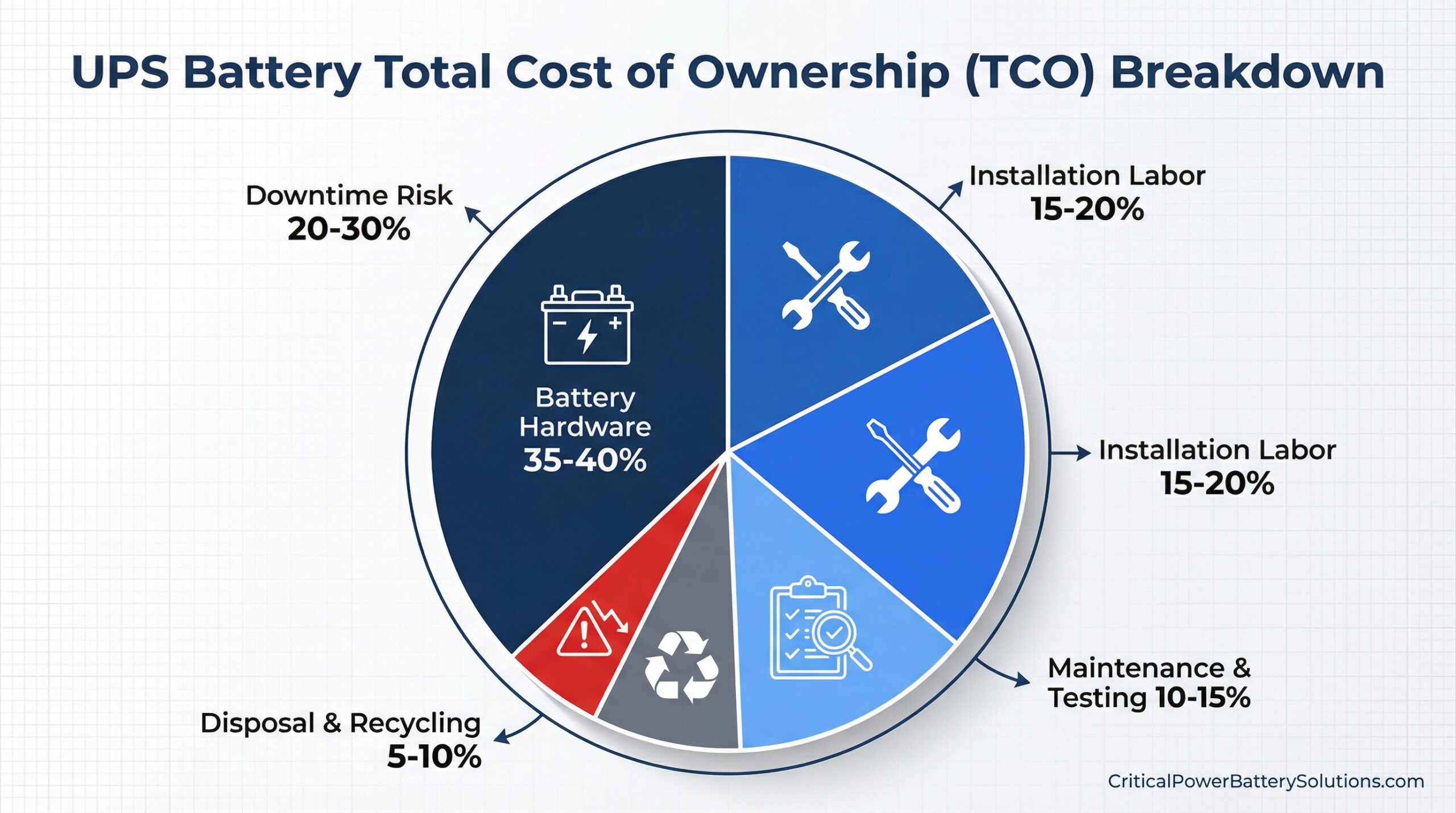
For a realistic ups battery cost analysis, we look beyond the catalog price. In industrial and enterprise environments, secondary cost elements can match or exceed the hardware spend. Below is a distilled view of the main battery replacement cost factors we typically review with clients.
| Cost Component | What to Consider | Impact on TCO |
|---|---|---|
| Battery hardware | Chemistry, capacity (Ah), brand, design life, premium vs commodity | Drives baseline ups system battery cost and expected lifespan |
| Installation labor | On-site labor, travel, overtime, safety procedures | Can equal 10–30% of total ups battery installation cost |
| Disposal & recycling | Hazmat handling, manifesting, recycling credits, compliance | Often overlooked battery disposal cost that recurs each refresh |
| Maintenance & testing | IEEE 450 / IEEE 1188 tests, inspections, monitoring systems | Influences battery maintenance cost factors and life extension |
| Warranty & service plans | Duration, coverage, on-site response time, exclusions | Part of ups battery warranty cost and risk transfer |
| Downtime risk | Business impact of failure during an outage, SLA penalties | Dominates critical power battery cost in high-stakes facilities |
For industrial UPS fleets, we often see that the soft costs—labor, logistics, and risk—become the real drivers. That is why an accurate battery replacement budget must incorporate both direct and indirect line items and tie them to the expected replacement interval.
3. Battery Lifespan, Replacement Frequency, and Cost per Year
Realistic service life is central to any ups battery lifecycle cost discussion. Label “design life” (e.g., 10-year, 15-year, 20-year) assumes ideal conditions; real-world battery replacement frequency cost is heavily driven by temperature, cycling, and maintenance. Each time you pull a string, you incur not just hardware but also labor and risk.
As a rule of thumb, conventional VRLA in controlled rooms often runs 3–5 years before capacity degradation drives replacement planning, whereas long-life pure lead VRLA and engineered systems (like Stryten’s Absolyte AGP) can support much longer intervals when maintained under IEEE guidelines. Multiplying expected replacements over 15–20 years is a good way to see the hidden multipliers in your budget.
Impact of Temperature and Utilization on Battery Replacement Planning Cost
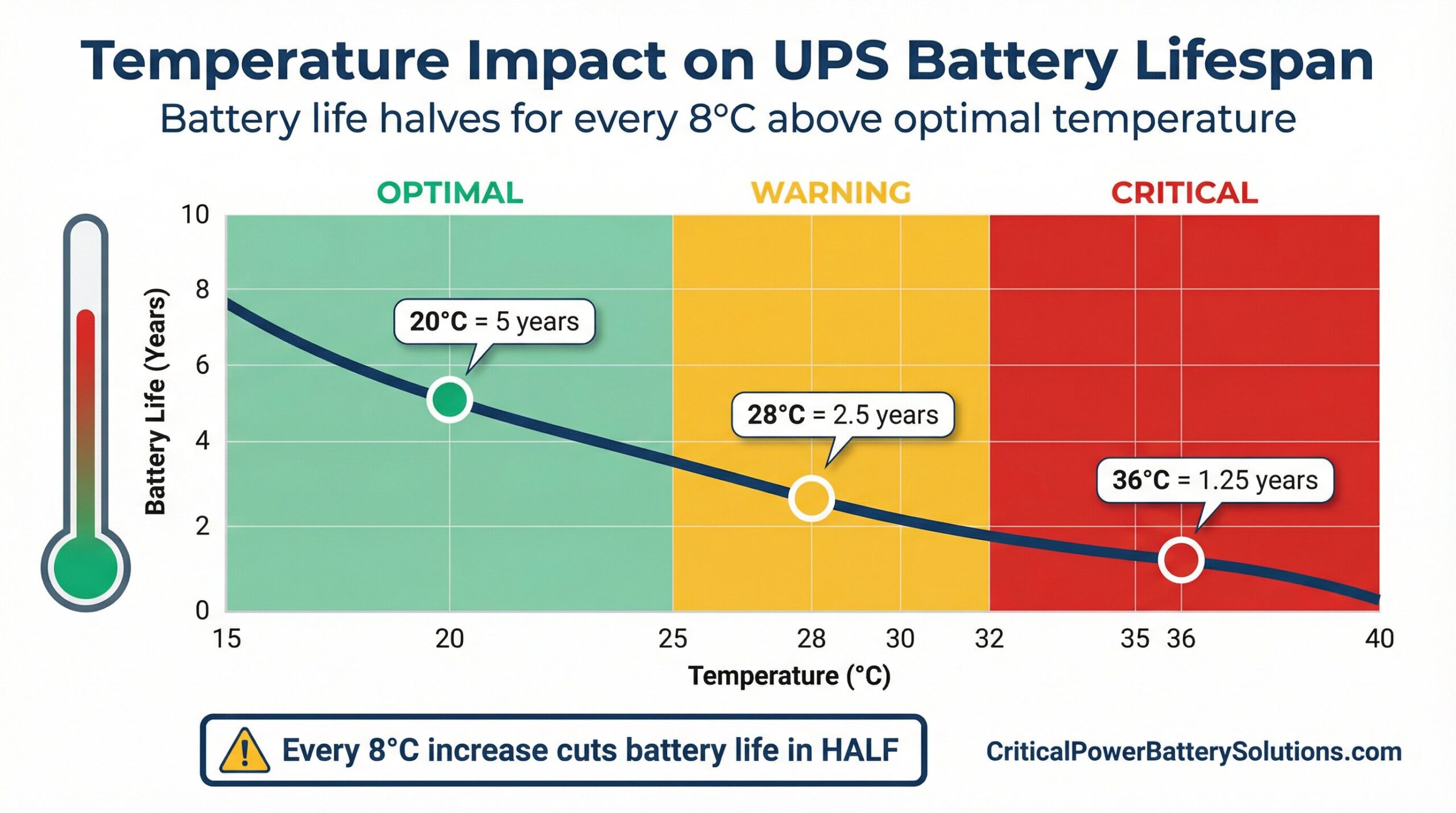
Ambient temperature is one of the most underestimated variables. For every roughly 8°C rise above the optimal 20–25°C band, practical life can be cut about in half, which can double your battery replacement planning cost across a decade. High cycle counts, frequent deep discharges, or sustained high float voltages have similar compounding effects.
We therefore advise tying ups battery procurement cost to environmental and operational profiles: a hotter telecom hut, for example, justifies more robust premium or pure lead solutions to keep the effective battery cost per year predictable.
4. Premium vs Commodity Battery Cost: How to Compare Real Value
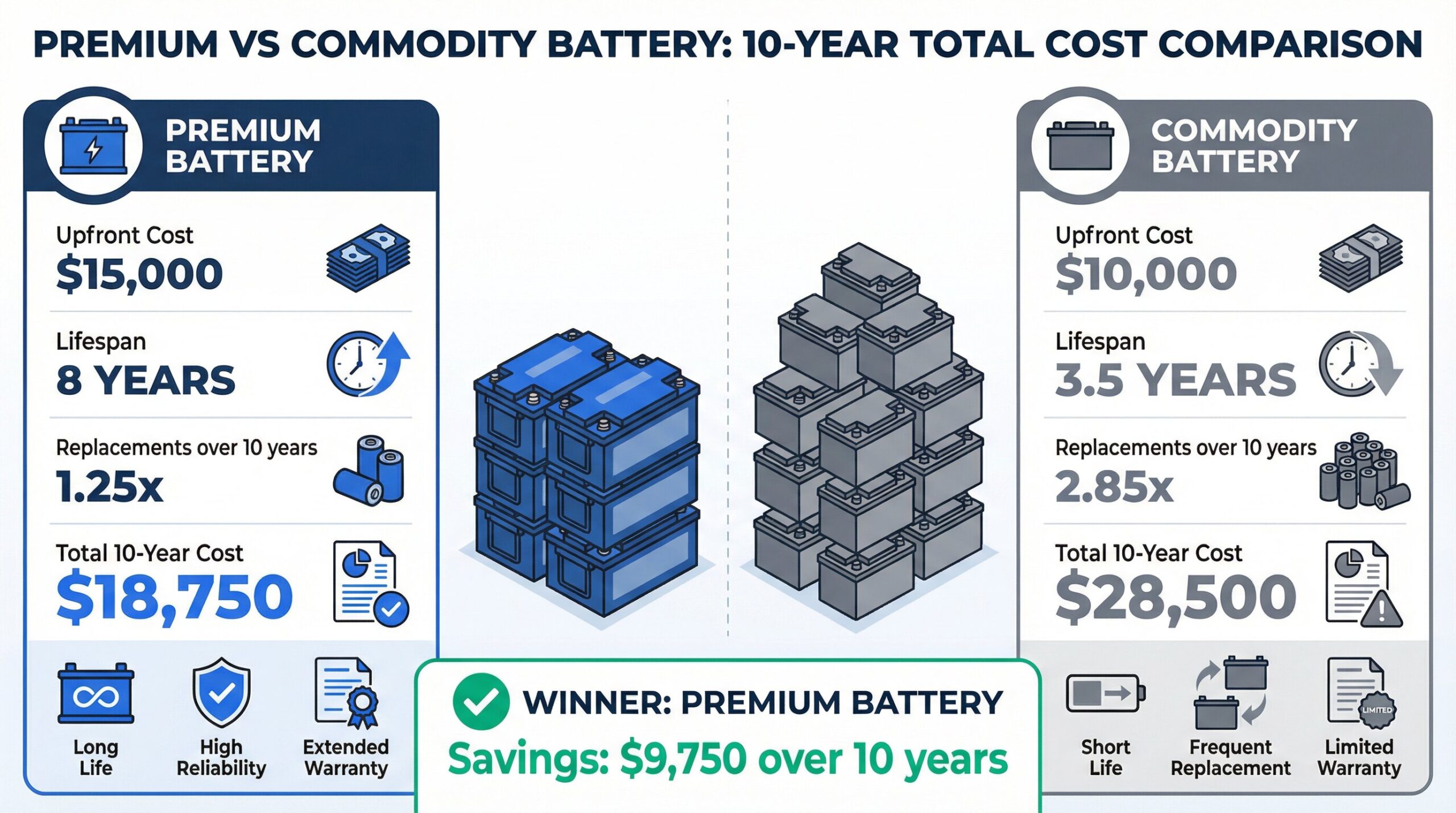
On paper, commodity VRLA often looks attractive. The unit price can be 15–25% lower than a premium pure lead or long-life AGM product, which looks good to a procurement spreadsheet. But over a 10–15 year window, premium vs commodity battery cost typically flips once you account for replacement cycles and associated soft costs.
Our comparisons show that a premium VRLA or pure lead product that costs modestly more upfront but lasts 40–60% longer can cut the number of change-outs almost in half. For a large UPS plant, a reduction from four full replacement cycles to two or three over 15–20 years can mean hundreds of avoided labor hours and multiple deferred outage windows, driving strong ups battery roi.
Illustrative Premium vs Commodity Battery TCO Comparison
| Scenario (Per String) | Commodity VRLA | Premium VRLA / Pure Lead |
|---|---|---|
| Relative upfront hardware cost | 100% | 115–125% |
| Realistic lifespan in controlled room | ~4 years | ~7 years |
| Replacements over 14 years | 3–4 cycles | 2 cycles |
| Estimated hardware + labor over 14 years | ~320–360% of initial | ~240–260% of initial |
| Approximate battery cost per year | 1.0x (baseline) | 0.7–0.8x baseline |
For CFOs, this is the heart of battery cost justification: a modest increase in year-one capex reduces the annuity of replacements, labor, and risk over the asset life. We typically structure enterprise ups battery pricing conversations around this multi-cycle lens rather than one-time purchase orders.
5. Stryten Energy (Formerly GNB): Positioning for Long-Life, Critical Power
For data centers, utilities, and telecom providers with high uptime expectations, we frequently recommend looking at Stryten Energy’s industrial portfolio as the premium tier in industrial ups battery pricing. The Stryten E-Series Absolyte AGP, for example, is engineered with a 20-year design life in many telecom and utility applications and is built around domestic manufacturing for supply chain resilience.
The transition from GNB Industrial Power (under Exide) into Stryten Energy provides continuity for existing installed bases. Many legacy systems specified “GNB Absolyte” and can be directly supported by current Stryten models, which simplifies battery replacement investment planning and mitigates requalification work.
Why We View Stryten as a Premium TCO Option
- Long design life (up to 20 years) reduces battery replacement frequency cost in stationary applications.
- Domestic manufacturing supports predictable lead times and stable ups battery procurement cost.
- Compatibility with legacy GNB specs protects prior engineering work and configuration standards.
When you compare Stryten’s long-life systems to commodity VRLA, the initial hardware delta is usually outweighed by extended service intervals and reduced exposure to mid-life replacement campaigns.
6. VRLA vs Lithium-Ion vs Pure Lead: Cost and Risk Trade-Offs
We are often asked whether lithium-ion will replace VRLA entirely in UPS applications. From a ups battery total cost ownership standpoint, it depends heavily on application profile, regulatory context, and thermal environment. Lithium-ion offers higher cycle life and energy density but carries higher upfront cost and more complex thermal and safety engineering.
In many stationary telecom and utility installations, long-life VRLA or pure lead technologies still provide an attractive balance of ups battery replacement pricing, simplicity, and field familiarity, especially when they are engineered to 15–20 year design lives and maintained per IEEE standards.
Lifecycle-Oriented Chemistry Comparison
| Chemistry | Upfront Cost | Service Life | Key TCO Notes |
|---|---|---|---|
| Commodity VRLA | Low | 3–5 years typical | Lower initial spend but higher replacement frequency and soft costs |
| Premium VRLA / Pure Lead | +15–25% | 7–15+ years (application-dependent) | Strong ups battery roi via fewer replacements and better reliability |
| Lithium-Ion | Highest | 8–10+ years | Excellent cycle life; needs careful evaluation of BMS, thermal management, and code implications |
From a critical power battery cost viewpoint, facilities with high outage impact often lean to premium VRLA or engineered systems like Absolyte to minimize operational risk, even when Li-ion might offer theoretical long-term savings.
7. Compliance, Testing Standards, and Their Impact on Cost
Adhering to IEEE and industry standards does introduce line items into your battery replacement budget, but it also extends life and reduces failure rate. Our technical teams reference IEEE 450 for vented lead-acid maintenance and IEEE 1188 for VRLA testing practices when designing maintenance programs for clients.
For telecom applications, NEBS (Network Equipment-Building System) compliance and related standards shape environmental and installation requirements that influence ups battery installation cost and enclosure decisions. Compliance is not merely a paperwork exercise; it is a lever on ups battery lifecycle cost.
Cost-Influencing Elements of Standards-Based Programs
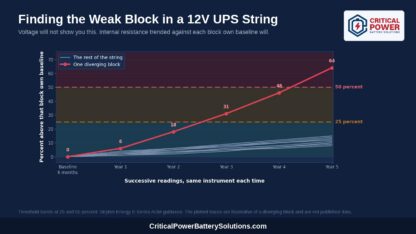
- Routine impedance and capacity testing to IEEE 1188 can identify weak jars early, reducing the probability of catastrophic string failures.
- Temperature monitoring and adjustment of float voltage help keep life aligned with design expectations, cutting unscheduled replacements.
- Documented maintenance logs support warranty claims, protecting your ups battery warranty cost investment.
When we build service plans, we include these programmatic activities as part of the ups battery tco model, not as optional extras, because they demonstrably lengthen effective life in the field.
8. Making the Business Case for Premium Batteries
This is the section most procurement and finance teams focus on: how to justify a higher line-item price with quantifiable ups battery value analysis. We recommend comparing quotes with a structured TCO matrix that evaluates each cost and risk category side-by-side.
Quote Comparison Framework for UPS Battery Replacement
| Evaluation Dimension | Example Commodity VRLA Quote | Example Premium Stryten / Pure Lead Quote |
|---|---|---|
| Upfront hardware cost | Baseline (100%) | +20% vs baseline |
| Installation labor | Same per event | Same per event |
| Disposal & recycling fees | Same per event | Same per event |
| Expected lifespan (realistic) | ~4 years | ~8 years |
| Replacement frequency in 16-year horizon | 4 full cycles | 2 cycles |
| Total hardware spend over 16 years | 4 × 100% = 400% | 2 × 120% = 240% |
| Total labor + disposal over 16 years | 4 × L | 2 × L |
| Battery downtime cost (risk-adjusted) | 4 outage windows & risk events | 2 outage windows & risk events |
| Effective battery cost per year | 1.0x baseline | ~0.6–0.7x baseline |
When we present this analysis to stakeholders, the premium option’s battery cost per year is often 30–40% lower, even though line-item hardware is higher. For mission-critical facilities, the reduction in battery downtime cost and operational disruption is usually the decisive factor.
Practical tip: When reviewing enterprise ups battery pricing, ask each vendor to supply expected life assumptions and replacement cadence explicitly, then run this kind of multi-cycle comparison before approving capex.
9. Application-Specific Cost Considerations: Data Center, Telecom, Utility
While the cost building blocks are similar across sectors, the weighting changes by application. In a hyperscale data center, downtime and SLA penalties dominate ups battery value analysis. In telecom, environmental conditions and NEBS compliance add weight. In utility substations, regulatory and safety requirements drive design and maintenance strategies.
These differences change how we interpret ups battery cost comparison. For example, a rural telecom hut with elevated ambient temperatures may prioritize robust pure lead front-terminal batteries like the Leoch PLH series to stabilize battery replacement planning cost, while a climate-controlled utility relay room may lean into very long design-life systems like Stryten Absolyte.
Case-Style Examples (Anonymized)
- Telecom network: Switching from commodity VRLA to pure lead front-terminal batteries cut replacements from every ~3 years to ~6 years, halving truck rolls and improving predictable battery replacement budget.
- Utility substation fleet: Standardizing on long-life Stryten strings and IEEE 1188 testing reduced unexpected failures and enabled aligning multiple substations to a single 10–12 year replacement window.
10. Building a Defensible Battery Replacement Budget and ROI Narrative
Facilities managers and procurement teams often have to convert technical realities into a capital request that finance can approve. We typically frame the narrative around three pillars: ups battery lifecycle cost, avoided risk and downtime, and operational efficiency (fewer outages, fewer truck rolls).
A concise ROI story might highlight that premium batteries cost 20% more upfront but reduce replacement events by 50%, cut lifecycle costs by 30–40%, and meaningfully lower outage risk. Quantifying even a single avoided outage in financial terms usually shifts the focus from unit price to ups battery total cost ownership.
Checklist for a Solid Business Case
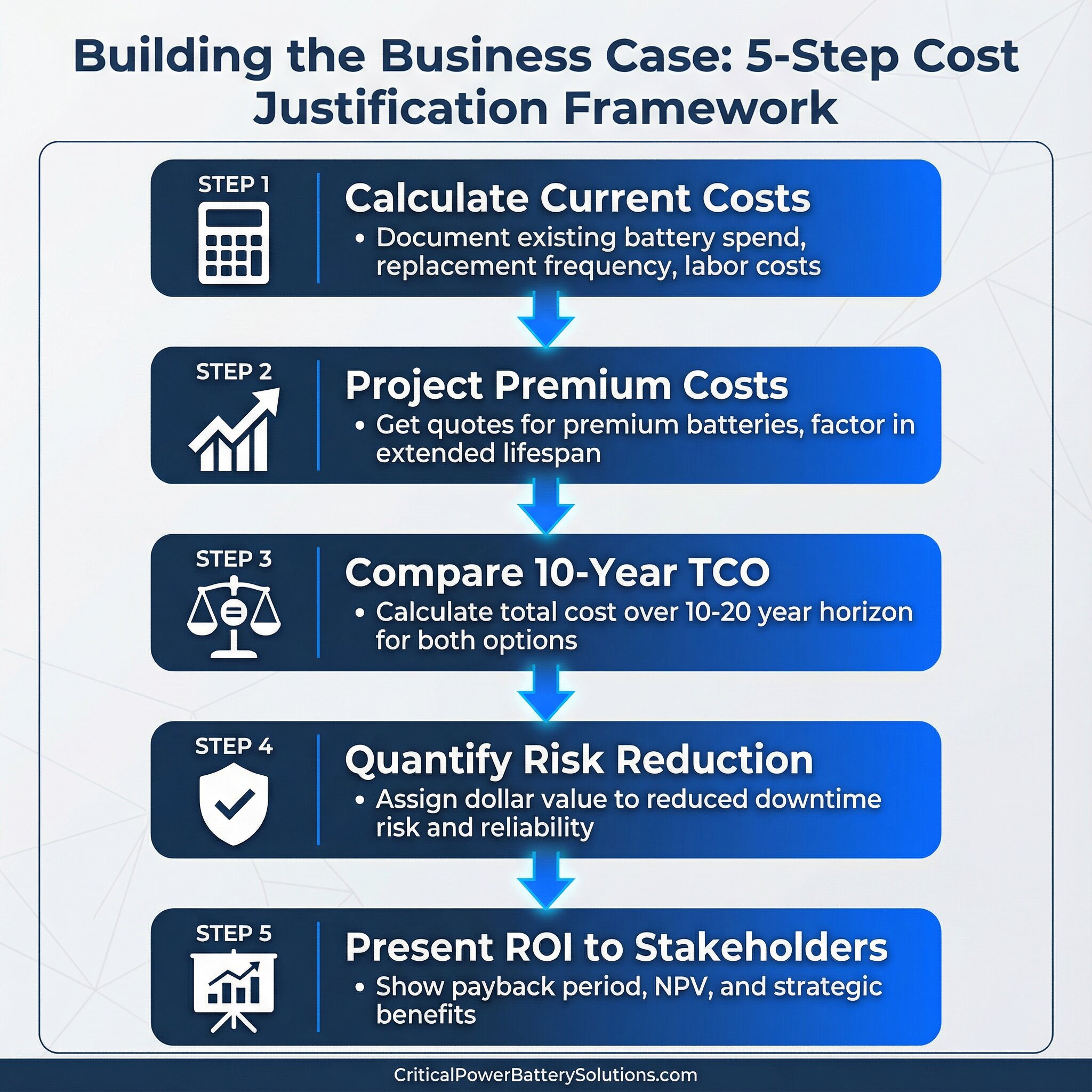
- Document current replacement frequency, labor, and disposal patterns.
- Quantify battery downtime cost (lost revenue, SLA hits, restart costs) for at least one credible outage scenario.
- Compare at least one commodity and one premium option using a multi-cycle TCO model.
- Align maintenance plans with IEEE 450 / IEEE 1188 to justify extended life assumptions.
When all of this is laid out in a structured way, the discussion shifts from “Why is this quote higher?” to “What’s the lowest-risk cost per year we can achieve for our critical power systems?”
Conclusion: Next Steps for Your UPS Battery Replacement Project
UPS battery replacement cost is not a single number; it is a profile of spend, risk, and operational effort across the next decade or more. When you evaluate options through the lens of battery cost per year, maintenance standards, and downtime exposure, premium batteries and long-life systems often provide clearer value and stronger justification than their line-item prices suggest.
If you are planning a replacement program or multi-site refresh, we can work with your facilities, procurement, and finance stakeholders to model a realistic TCO and select the right mix of technologies and vendors for your environment.
Next Steps for Your UPS Battery Replacement Project
- Schedule a free 15-minute technical assessment call. We will review your existing UPS fleet, age profile, and environmental conditions to frame your ups battery replacement cost and risk posture.
- Download a comprehensive UPS battery replacement planning guide. Use it internally to align engineering, operations, and finance on assumptions for ups battery tco and replacement intervals.
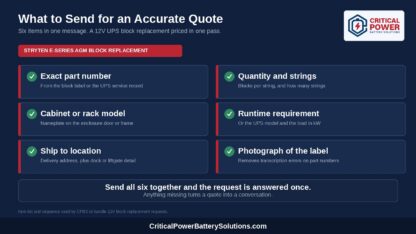
- Request a custom quote for your system. We will provide a structured ups battery cost comparison across commodity and premium options, including installation, disposal, and maintenance elements.
- Schedule an on-site evaluation. For complex or multi-site environments, a physical assessment helps refine battery replacement planning cost and identify opportunities to standardize on high-ROI, long-life solutions.
Approached this way, UPS battery replacement becomes a controllable, defensible investment in business continuity rather than a recurring emergency expense.